
Sweat, movement, and long wear time often cause slipping, discomfort, or embarrassment with poorly made breast pads. This issue leads to customer complaints, returns, and damaged brand trust.
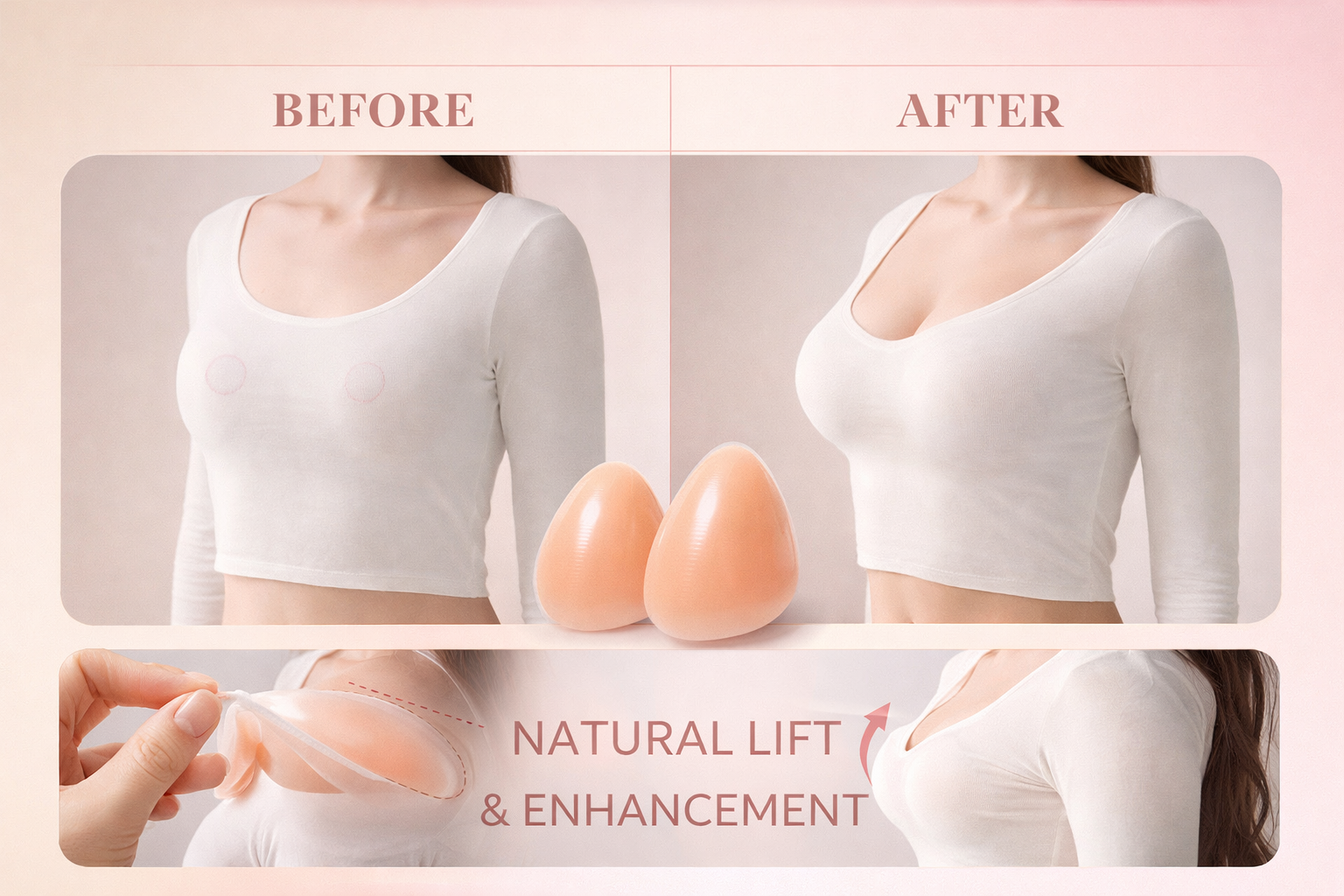
Silicone breast pads stay in place through a combination of medical-grade silicone material, engineered adhesive layers, precise thickness control, and surface friction design that allows secure skin bonding without external support.
The ability of silicone breast pads to remain stable is not accidental. It is the result of material science, adhesive engineering, and strict manufacturing control. The following sections explain the key technical factors behind reliable adhesion and long-term wear performance.
What Role Does Medical-Grade Silicone Play in Adhesion?
Poor silicone quality leads to odor, irritation, weak stickiness, and fast degradation after washing. This directly impacts user safety and repeat usage.
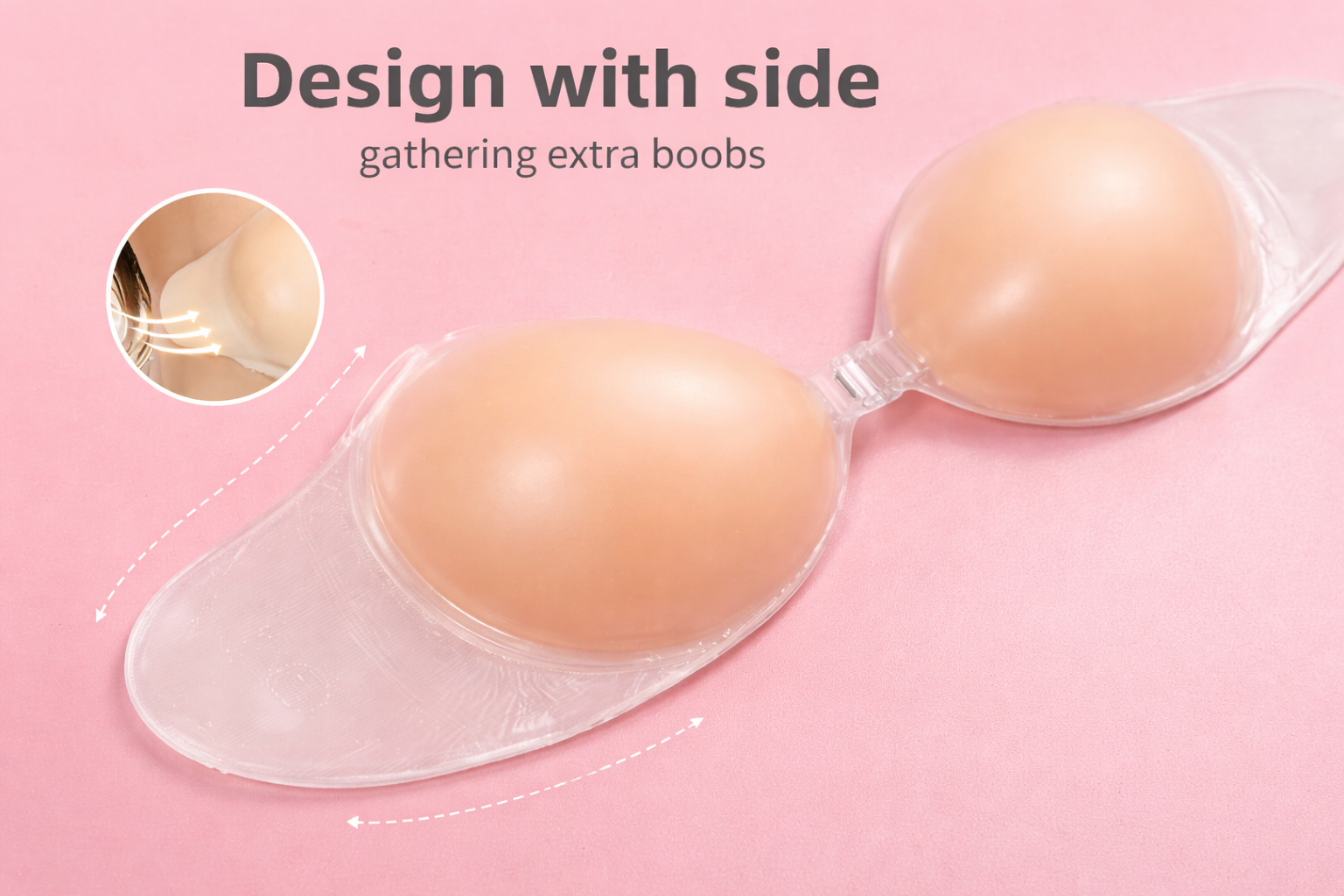
Medical-grade silicone provides skin-safe flexibility, natural surface tension, and micro-adhesion that allows breast pads to conform closely to the skin.
Silicone breast pads rely heavily on the base material itself. High-purity platinum-cured silicone offers excellent elasticity, softness, and skin compatibility. Unlike industrial silicone, medical-grade silicone does not contain harmful plasticizers or volatile residues. This purity allows direct skin contact for extended periods without irritation.
From a technical perspective, silicone has natural surface tension that creates mild suction when pressed against skin. This effect increases when body heat warms the material, allowing it to adapt to skin texture and contours. Thicker silicone provides weight and structure, while thinner edges improve blending and reduce visible lines.
In manufacturing, raw silicone viscosity, curing temperature, and molding pressure must be precisely controlled. Inconsistent silicone formulation leads to uneven elasticity and weak edge adhesion. Strict incoming material inspection and batch testing are essential to ensure stable performance across mass production.
How Does the Adhesive Layer Keep Breast Pads Secure?
Many adhesion failures come from glue that is too aggressive, too weak, or unstable under sweat and heat.
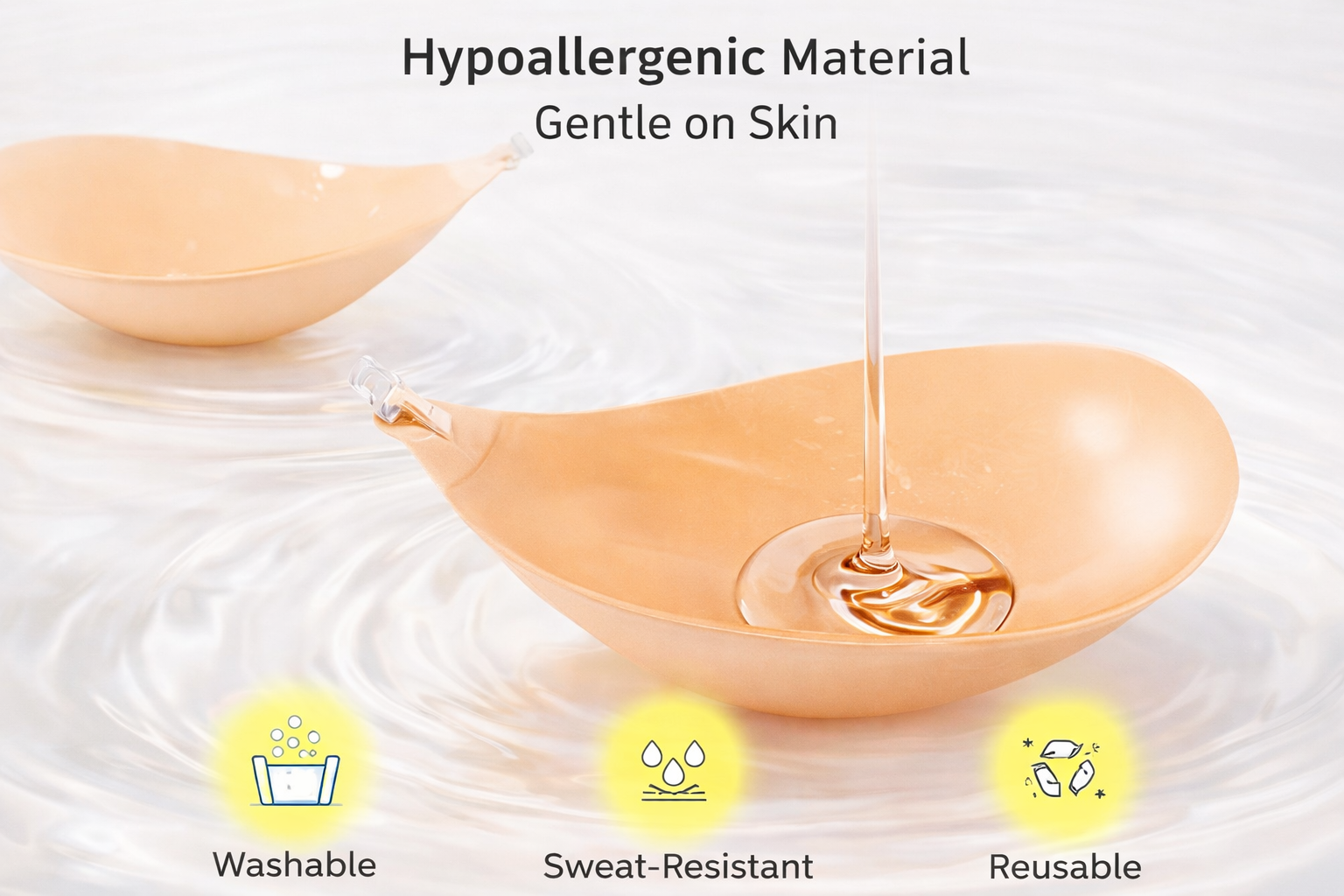
A medical-grade pressure-sensitive adhesive allows breast pads to bond securely to skin while remaining breathable, reusable, and non-irritating.
High-quality silicone breast pads use medical-grade silicone adhesive rather than common acrylic glue. This adhesive activates through gentle pressure, forming a uniform bond without chemical irritation. Unlike permanent adhesives, it allows repositioning and repeated use.
The adhesive layer must balance strength and skin safety. Too strong, and removal causes discomfort or residue. Too weak, and the pad slides during movement. Advanced formulations are tested under simulated sweat, humidity, and temperature changes to ensure consistent performance.
Adhesive coating thickness is another critical factor. Automated coating systems ensure uniform distribution across the pad surface. Manual or uneven coating often causes edge lifting or center detachment. After coating, curing time and cleanliness conditions in the workshop directly affect final adhesion strength.
Why Does Pad Shape and Edge Design Matter?
Even with good adhesive, poor shape design leads to rolling edges and visible outlines under clothing.
Ergonomic shaping and ultra-thin tapered edges improve contact area and reduce lifting during body movement.
Modern silicone breast pads are engineered with anatomical curvature. This shape matches natural breast contours, allowing even pressure distribution across the skin. Flat designs fail to maintain full contact, especially during walking or arm movement.
Edge thickness plays a major role. High-quality pads use feathered edges, often less than 0.5 mm thick. These edges blend seamlessly into the skin, reducing peel-off points and improving invisibility under clothing.
Mold precision directly impacts shape accuracy. CNC-machined molds and controlled injection processes ensure consistent dimensions across thousands of units. Any deviation causes uneven stress points, increasing the risk of detachment during wear.
How Do Sweat and Body Heat Affect Adhesion?
Heat and moisture are the biggest challenges for skin-contact products, especially in summer or active conditions.

Premium silicone breast pads are designed to maintain adhesion under sweat and heat through breathable adhesive and moisture-resistant silicone structure.
Body heat actually improves silicone flexibility, helping pads conform better over time. However, sweat can weaken poor adhesives. To solve this, advanced adhesive formulations allow moisture vapor to escape while maintaining surface grip.
In production testing, pads undergo simulated wear tests at elevated temperatures and humidity levels. These tests identify adhesive breakdown, edge lifting, or surface slippage before products enter the market.
Surface texture also contributes to sweat resistance. Micro-textured adhesive surfaces increase friction without damaging skin. Smooth but engineered surfaces help maintain grip even when moisture is present.
How Does Reusability Affect Staying Power?
Repeated washing often causes breast pads to lose stickiness, leading to short product lifespan.
High-quality silicone breast pads maintain adhesion through washable adhesive layers designed for repeated cleaning and reuse.
Reusable silicone breast pads rely on adhesive that reactivates after cleaning. Properly formulated silicone adhesive regains its tackiness once oils and debris are removed. This allows 30 to 60 reuse cycles without performance loss.
Manufacturing cleanliness is essential. Dust-free workshops, controlled humidity, and protective films prevent contamination before packaging. Even minor contamination reduces initial adhesion and long-term reusability.
Quality control teams perform adhesion recovery tests after multiple wash cycles. Pads that fail to recover stickiness are rejected before shipment, ensuring consistent user experience across batches.
How Do Manufacturing Processes Ensure Consistent Performance?
Inconsistent quality usually comes from poor process control, not design flaws.
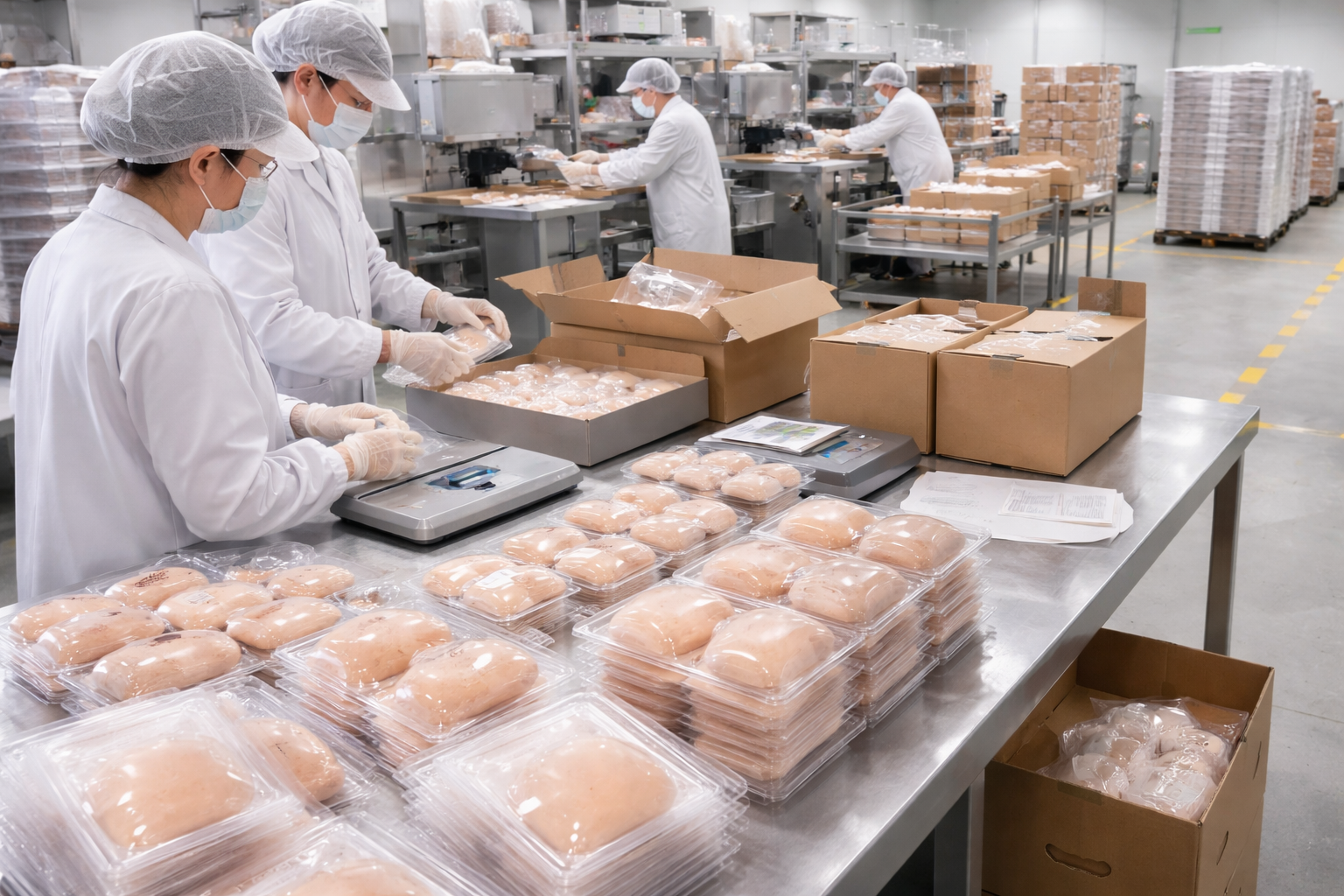
Stable adhesion performance depends on controlled molding, adhesive coating, curing, inspection, and clean-room packaging processes.
A professional manufacturing facility integrates silicone molding, adhesive application, trimming, washing, and packaging under one roof. This reduces variability and improves traceability.
Production begins with precision molds and calibrated injection systems. After curing, pads undergo edge trimming and surface inspection. Adhesive coating is performed in temperature-controlled rooms to ensure even curing. Final washing removes residues, followed by drying and protective film application.
Quality control includes peel-strength testing, skin simulation testing, odor testing, and visual inspection. Only products that meet internal standards proceed to packaging. This full-process control ensures every unit delivers the same adhesion performance expected by the market.
Conclusion
Silicone breast pads stay in place through advanced material selection, medical-grade adhesive engineering, ergonomic design, and strict manufacturing control. Reliable adhesion is not a single feature but the result of a complete production system, from raw material to final inspection. When silicone purity, adhesive formulation, shape design, sweat resistance, reusability, and factory processes work together, the result is a stable, safe, and long-lasting product. For brands seeking consistent performance, reduced complaints, and long-term market trust, manufacturing capability and process discipline remain the foundation of truly dependable silicone breast pads.
