
Silicone bras appear simple, yet many performance problems come from misunderstanding how they actually function. Slipping, poor lift, and discomfort are usually caused by incorrect structure or low manufacturing standards.
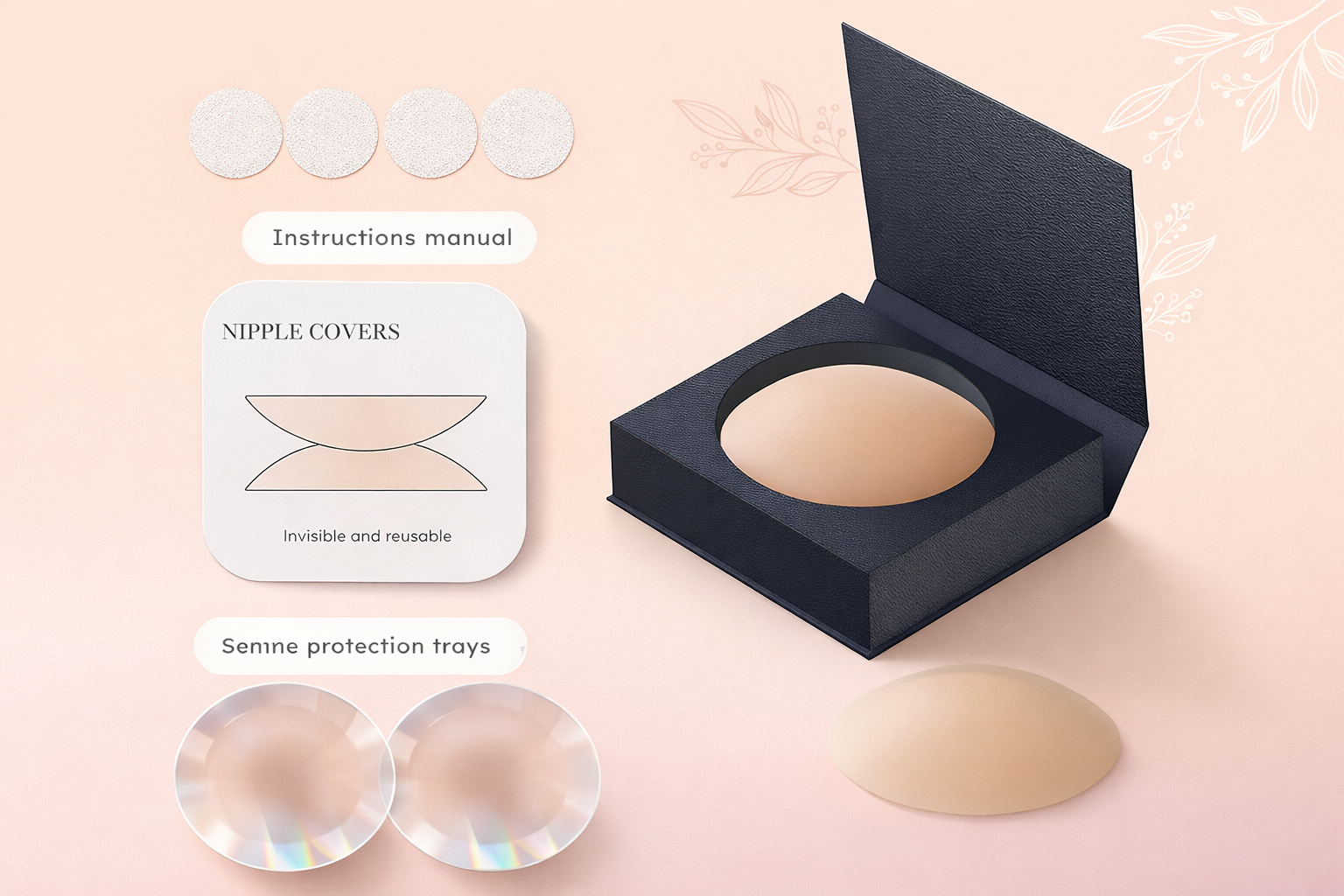
A silicone bra works by combining flexible silicone structure, skin-activated adhesion, and pressure distribution to provide support, shaping, and invisibility without traditional straps or bands.
The working principle of a silicone bra is not accidental. It is the result of material science, mold engineering, adhesive formulation, and controlled factory processes working together. Understanding this mechanism explains why quality varies widely across the market.
What role does silicone material play in a silicone bra?
Material quality determines comfort, safety, and durability. Poor silicone leads to odor, stiffness, and deformation.
Silicone bras rely on high-purity, skin-safe silicone to create flexibility, softness, and stable contact with the body.
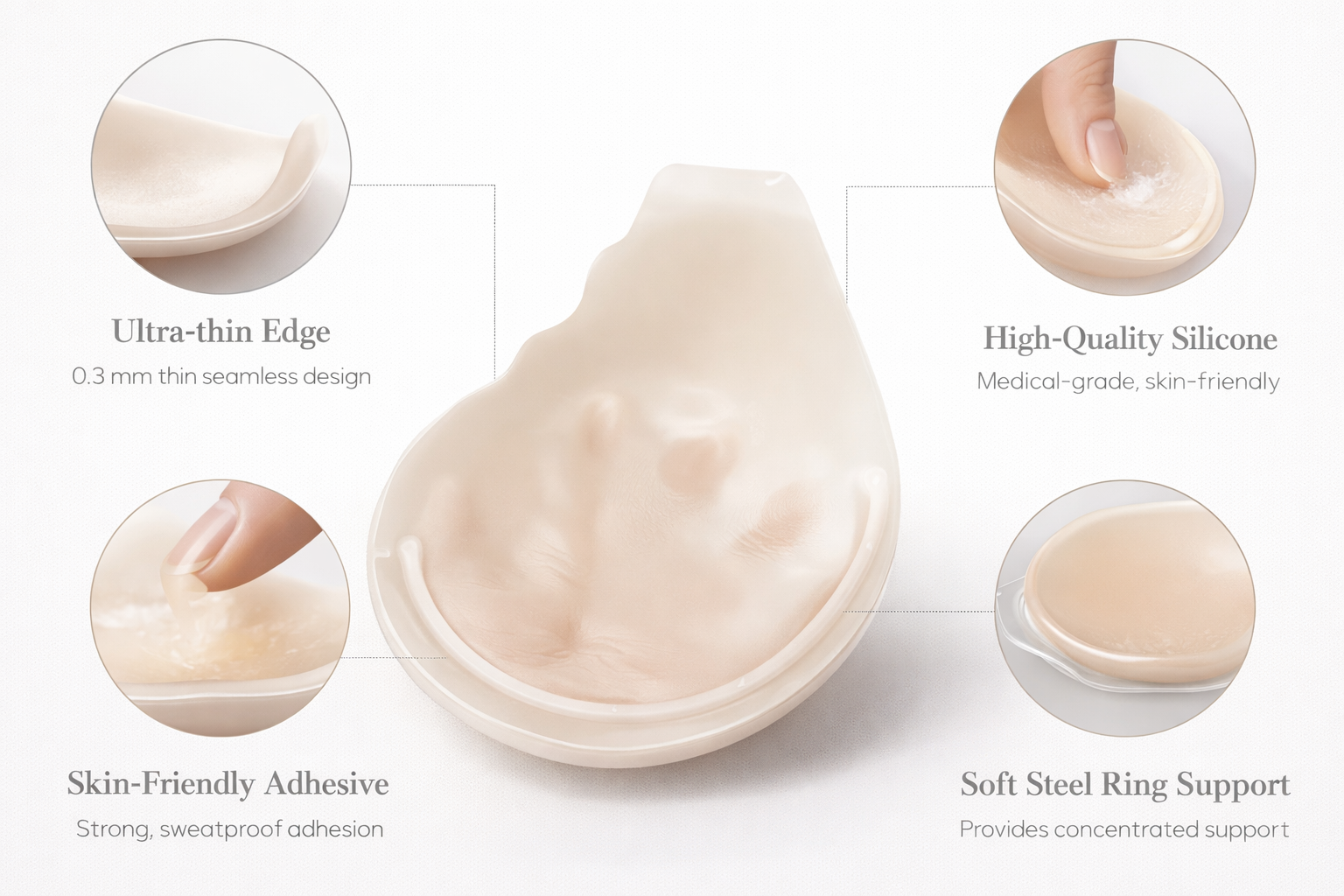
Silicone used in professional silicone bras is typically platinum-cured, chosen for its stability, elasticity, and odor-free characteristics. This type of silicone maintains softness while resisting deformation under pressure and heat. It adapts to body movement without collapsing or wrinkling.
In manufacturing, silicone raw materials are carefully measured and mixed to control density and elasticity. Density affects weight and drape, while elasticity influences how the bra conforms to natural curves. Incorrect ratios lead to excessive heaviness or insufficient support.
Molding is done using precision steel molds to ensure uniform thickness. Thicker areas provide structural support, while thinner zones improve flexibility and edge invisibility. This thickness mapping is a key design element that allows a silicone bra to shape rather than simply cover.
Post-curing processes stabilize the silicone and remove residual compounds. This step is critical for long-term skin comfort and consistent performance.
How does adhesion allow a silicone bra to stay in place?
Support without straps depends on adhesion balance.
A silicone bra stays in place through pressure-sensitive adhesive that bonds with clean skin using body heat and surface contact.

The adhesive layer is engineered to activate with gentle pressure and body temperature. Once applied, the adhesive forms micro-level contact with the skin surface, creating grip without penetrating the skin.
Adhesives are formulated to balance peel strength and comfort. Excessively strong adhesives may hold firmly but cause discomfort during removal. Weak adhesives fail under sweat or movement. Proper formulation ensures secure wear while allowing clean release.
In factory production, adhesives are applied using automated coating machines to achieve consistent thickness. Uniform coating ensures even adhesion across the entire cup, preventing edge lifting or pressure points.
Adhesive curing and aging tests are conducted to confirm stability over time. These tests simulate storage, transportation, and repeated use to ensure adhesion performance does not degrade unpredictably.
How does shaping and lift work without underwire?
Shaping comes from structure, not hardware.
Silicone bras create lift and shape through molded curvature, pressure distribution, and strategic thickness design.
Instead of underwires or bands, silicone bras rely on engineered cup geometry. The curvature of each cup is designed to guide breast tissue inward and upward when pressure is applied during wear.
Mold design determines lift performance. The lower and outer portions of the cup are often thicker to provide support, while inner areas guide shaping. This structural logic is refined through repeated prototyping and wear testing.
Factory testing evaluates how silicone responds to gravity and movement. Stretch recovery tests ensure the material returns to its original shape after use, preventing sagging or collapse over time.
Edge tapering is another critical factor. Thin, feathered edges blend seamlessly with skin and clothing while reducing visibility under tight garments. Precision trimming and molding techniques are required to achieve this effect consistently.
How does reusability affect the working mechanism?
Repeated use should not compromise performance.
A silicone bra is designed to maintain adhesion and shape through multiple wear and wash cycles when materials and bonding are correctly engineered.

Reusability depends on how well adhesive bonds to the silicone base rather than sitting loosely on the surface. Advanced bonding methods integrate adhesive layers directly into the silicone surface.
Wash-cycle testing simulates real usage conditions. Products are washed, air-dried, and reapplied repeatedly to evaluate adhesion recovery. Stable adhesives regain tackiness after drying without shedding residue.
Silicone integrity also matters. Inferior silicone may stiffen or lose elasticity after repeated washing. High-quality formulations maintain softness and shape even after dozens of cycles.
Proper surface smoothness prevents dust accumulation and simplifies cleaning. Factory polishing and mold finishing directly affect long-term hygiene and usability.
How do factory workshops and processes influence performance?
Performance consistency begins on the production floor.
Controlled factory environments ensure silicone bras work as designed through precise molding, curing, coating, and inspection.
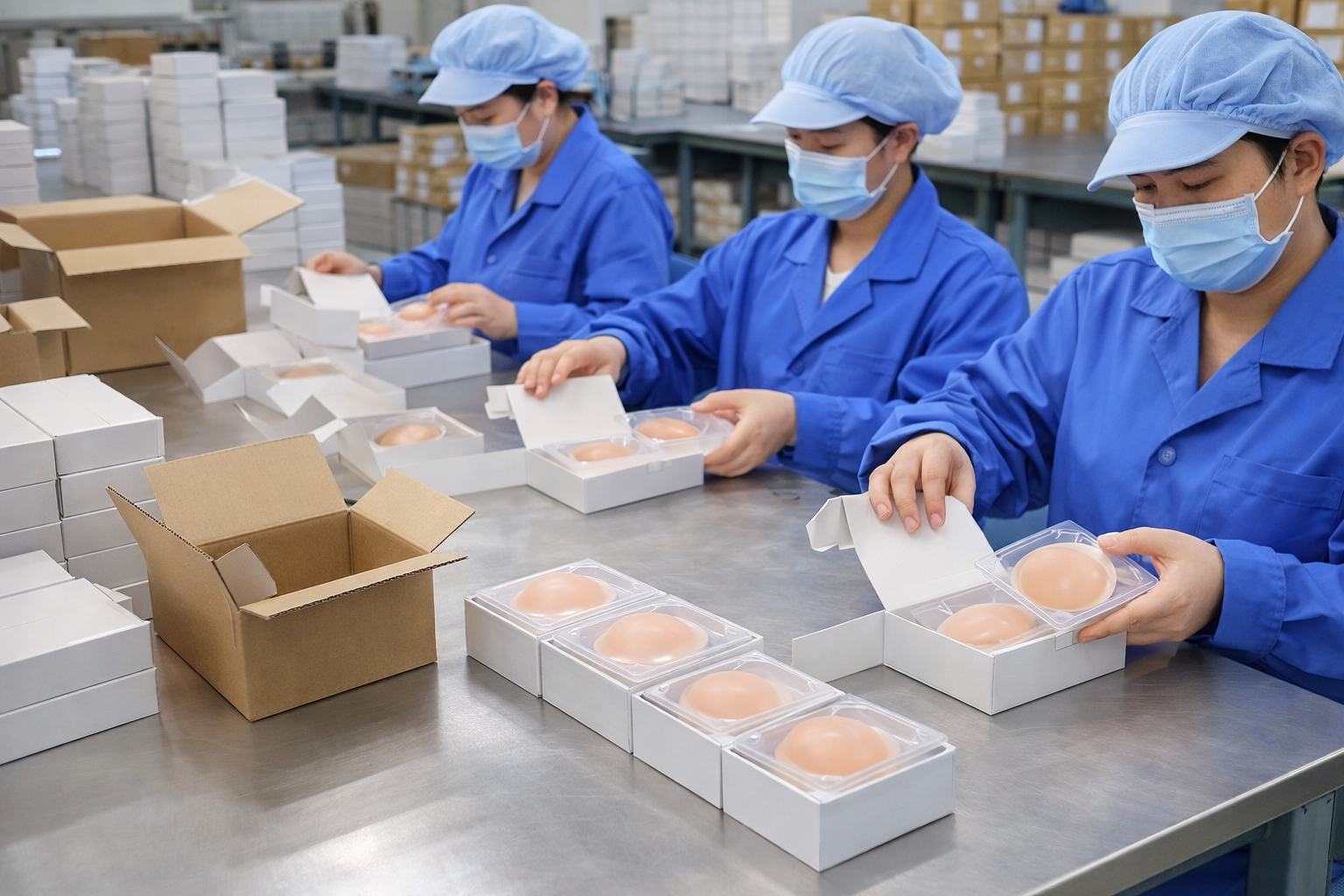
Professional workshops are divided into specialized zones: silicone preparation, molding, curing, adhesive coating, assembly, and quality inspection. Each zone operates under controlled temperature and humidity to avoid material variation.
Molding machines apply consistent pressure to ensure uniform structure. After molding, post-curing ovens stabilize silicone properties and eliminate residual substances.
Adhesive coating lines use automation rather than manual application. This reduces human error and ensures consistent adhesion strength across large production volumes.
Quality control includes visual inspection, adhesion testing, tensile strength testing, and odor checks. Products that do not meet standards are removed before packaging. This systematic approach ensures that every silicone bra functions according to design intent.
Why do silicone bras perform differently across brands?
Differences reflect engineering depth.
Silicone bra performance varies due to differences in material grade, mold design, adhesive formulation, and manufacturing discipline.
Some products focus only on appearance while neglecting structural engineering. Without proper thickness mapping, adhesion tuning, and material testing, performance becomes inconsistent.
Factories with in-house design and development capabilities can optimize cup shape, lift angle, and adhesive distribution. This allows adaptation to different sizes, skin types, and usage scenarios.
Traceable production records allow continuous improvement. When feedback identifies an issue, adjustments can be made at the mold, material, or process level rather than relying on surface changes.
A silicone bra is not a simple accessory. It is a system combining material science, mechanical design, and process control.
Conclusion
A silicone bra works through the integration of flexible silicone material, pressure-sensitive adhesion, engineered shaping, and disciplined factory processes. Every stage, from raw material selection to molding, curing, coating, and inspection, contributes to performance. When these elements are properly designed and controlled, silicone bras deliver invisible support, stable adhesion, and consistent comfort across repeated wear. Long-term reliability is the result of engineering precision rather than surface appearance alone.
