
Many wear issues start with overuse. Skin discomfort, reduced stickiness, and poor shaping are often caused by wearing adhesive bras longer than they are designed for.
An adhesive bra is generally designed to be worn safely for 6–8 hours per use, depending on skin condition, environment, and product engineering.
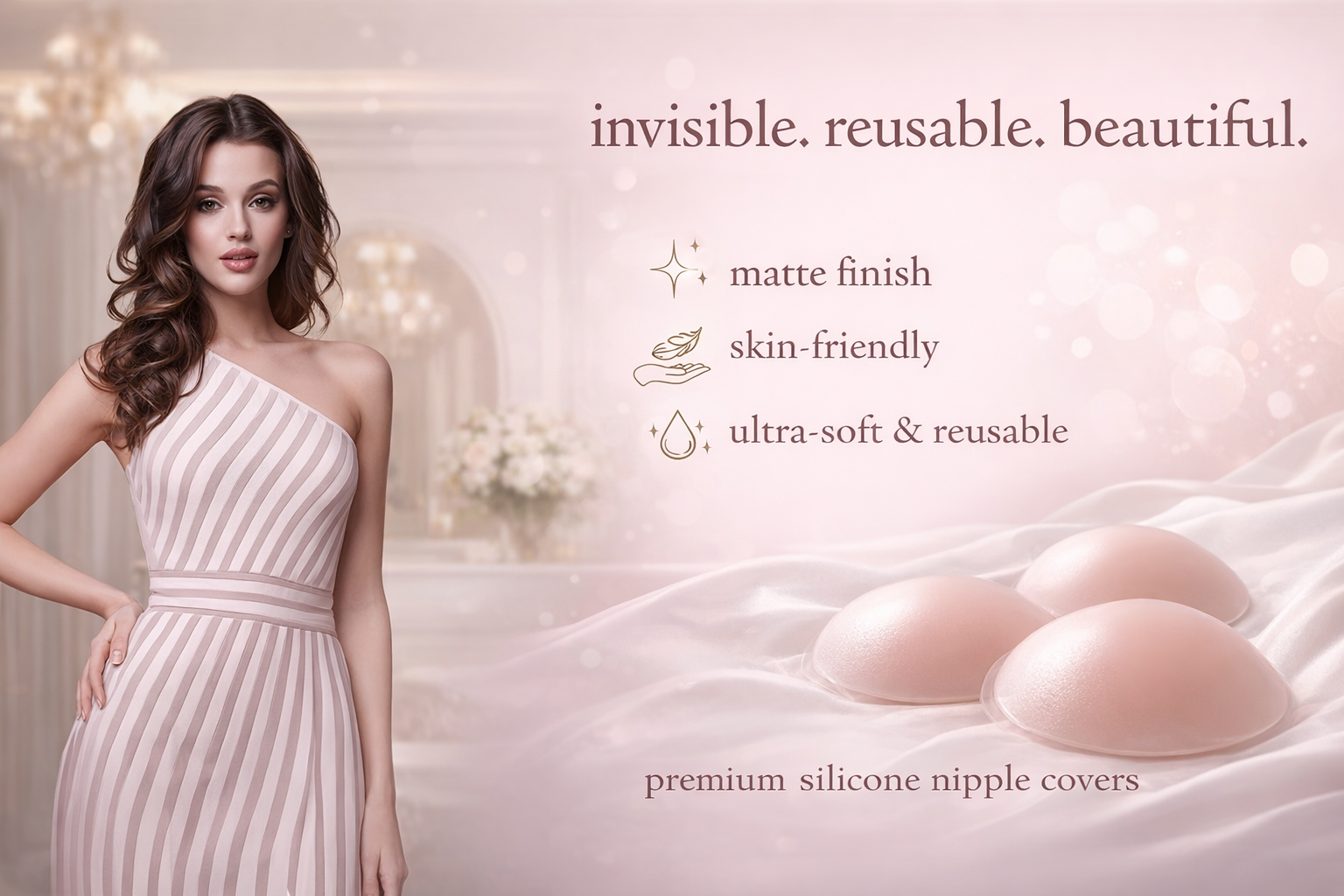
The recommended wear time is not an arbitrary suggestion. It is defined by adhesive chemistry, silicone breathability, and factory-level testing. Understanding these limits helps preserve both skin comfort and product lifespan.
Why is there a time limit for wearing adhesive bras?
Extended wear introduces risks.
Adhesive bras are intended for temporary wear because prolonged skin contact reduces breathability and increases adhesive fatigue.
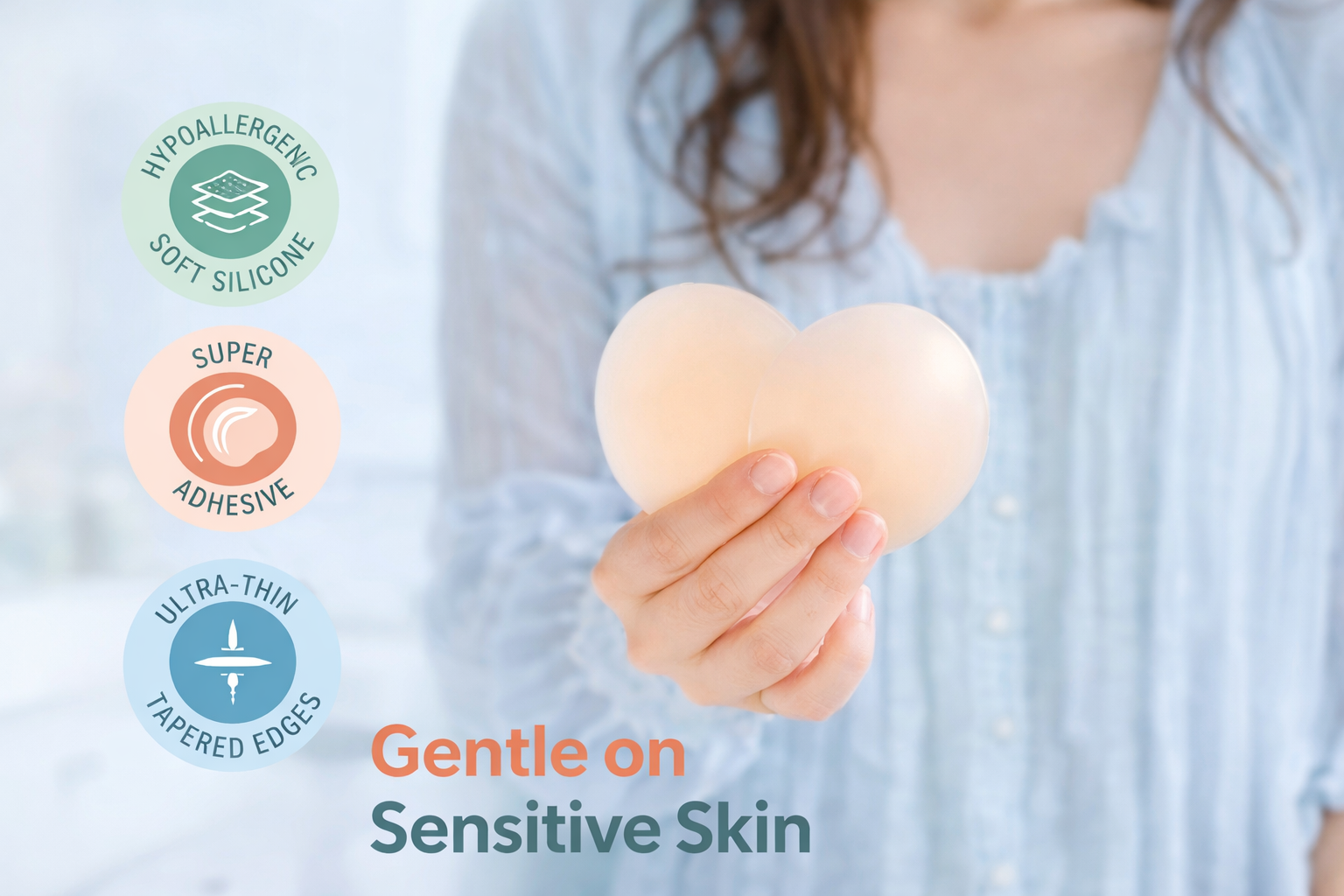
Adhesive bras rely on pressure-sensitive adhesive that forms surface contact with the skin. While this adhesive is skin-safe, it also limits airflow to the covered area. Over time, trapped heat and moisture increase skin stress.
Manufacturers evaluate safe wear duration during product development. Wear tests simulate real conditions such as body heat, light perspiration, and movement. Adhesion stability and skin response are monitored across several hours.
Most high-quality adhesive systems are optimized for event-based or daily temporary wear rather than continuous all-day use. Extending wear beyond tested limits increases the risk of irritation and accelerates adhesive breakdown.
Time limits are therefore part of the product’s engineering design rather than conservative labeling.
Does skin type affect how long an adhesive bra can be worn?
Individual skin conditions influence tolerance.
Dry, normal skin generally tolerates longer wear, while sensitive or oily skin may require shorter durations.

Skin produces natural oils and moisture throughout the day. These substances migrate into the adhesive layer over time, reducing grip and increasing skin friction.
Factories test adhesive behavior under standardized skin conditions, but real-world variation is expected. Sensitive skin may react sooner to prolonged occlusion, while oily skin weakens adhesion faster.
Adhesive formulations are tuned to balance comfort and hold, but no adhesive can fully eliminate skin variability. This is why wear-time guidance is conservative and designed to fit the widest range of skin types.
Shorter wear cycles help maintain both comfort and adhesion consistency across different users.
How do heat and sweat affect wear duration?
Environmental conditions shorten safe wear time.
High temperatures and perspiration reduce recommended wear time by accelerating adhesive fatigue and skin moisture buildup.
Body heat activates pressure-sensitive adhesives, improving initial grip. However, excessive heat softens adhesive polymers and increases sweat production.
Sweat introduces moisture between the skin and adhesive surface, reducing contact area and increasing slippage risk. Prolonged exposure under these conditions stresses adhesive structure.
In factory testing, products are exposed to elevated temperature and humidity cycles. Adhesion loss and surface changes are measured to define realistic wear windows.
Under warm or active conditions, reducing wear time helps protect skin health and extend product lifespan.
Can wearing an adhesive bra too long damage the product?
Overuse affects reusability.
Extended wear accelerates adhesive degradation, reducing the number of effective reuse cycles.
Adhesive polymers experience continuous shear stress during wear. Movement stretches the adhesive layer, and moisture interferes with recovery.
When wear duration exceeds design limits, adhesive fatigue increases. This results in uneven stickiness, edge lifting, or residue buildup after removal.
Manufacturers evaluate durability through repeated wear-and-wash simulations. Products are designed to perform best when wear duration aligns with testing assumptions.
Excessive wear shortens usable life regardless of adhesive quality. Respecting wear-time limits preserves long-term performance.
How do factory processes define safe wear hours?
Wear duration is engineered during production.
Material selection, adhesive formulation, and curing control determine how long an adhesive bra can be worn comfortably and safely.
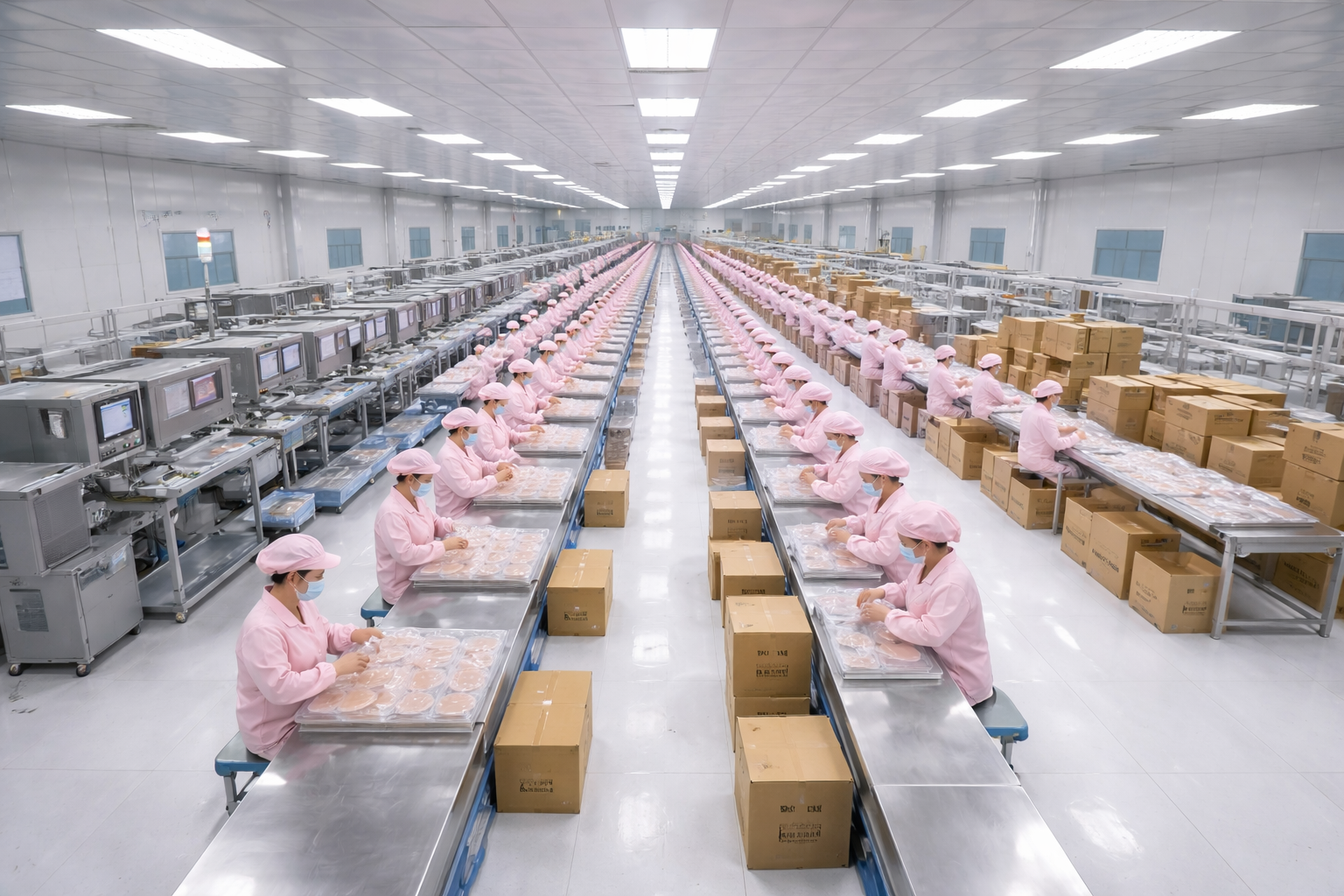
Factories select silicone grades with specific elasticity and thermal stability. Silicone must remain soft under body heat without trapping excessive moisture.
Adhesives are formulated and cured to maintain stability within defined temperature and humidity ranges. Improper curing shortens safe wear time.
Wear testing is conducted during development. Products are monitored for adhesion loss, shape stability, and surface condition across time intervals.
These test results define recommended wear hours. Production consistency ensures that wear-time guidance applies across batches rather than just prototypes.
When should an adhesive bra be removed immediately?
Comfort signals matter.
An adhesive bra should be removed if discomfort, itching, excessive sweating, or edge lifting occurs.
Discomfort is an early indicator of skin stress or adhesive fatigue. Ignoring these signals increases irritation risk and damages adhesive layers.
Professional product guidelines emphasize listening to physical feedback rather than pushing wear limits. Early removal preserves both skin comfort and product condition.
Factories design adhesives to release cleanly when removed correctly. Timely removal prevents overstressing adhesive polymers and improves recovery after washing.
Conclusion
An adhesive bra is typically designed for 6–8 hours of safe, comfortable wear. This limit is determined by adhesive chemistry, silicone breathability, environmental conditions, and factory testing standards. Wearing within recommended hours protects skin health, maintains adhesion stability, and extends product lifespan. When wear duration aligns with engineering design, adhesive bras deliver reliable support and comfort without compromising long-term performance.
