
Skin-contact lingerie products are becoming more popular, but safety concerns keep rising. Irritation, poor adhesion, and quality inconsistency are real risks buyers often overlook.
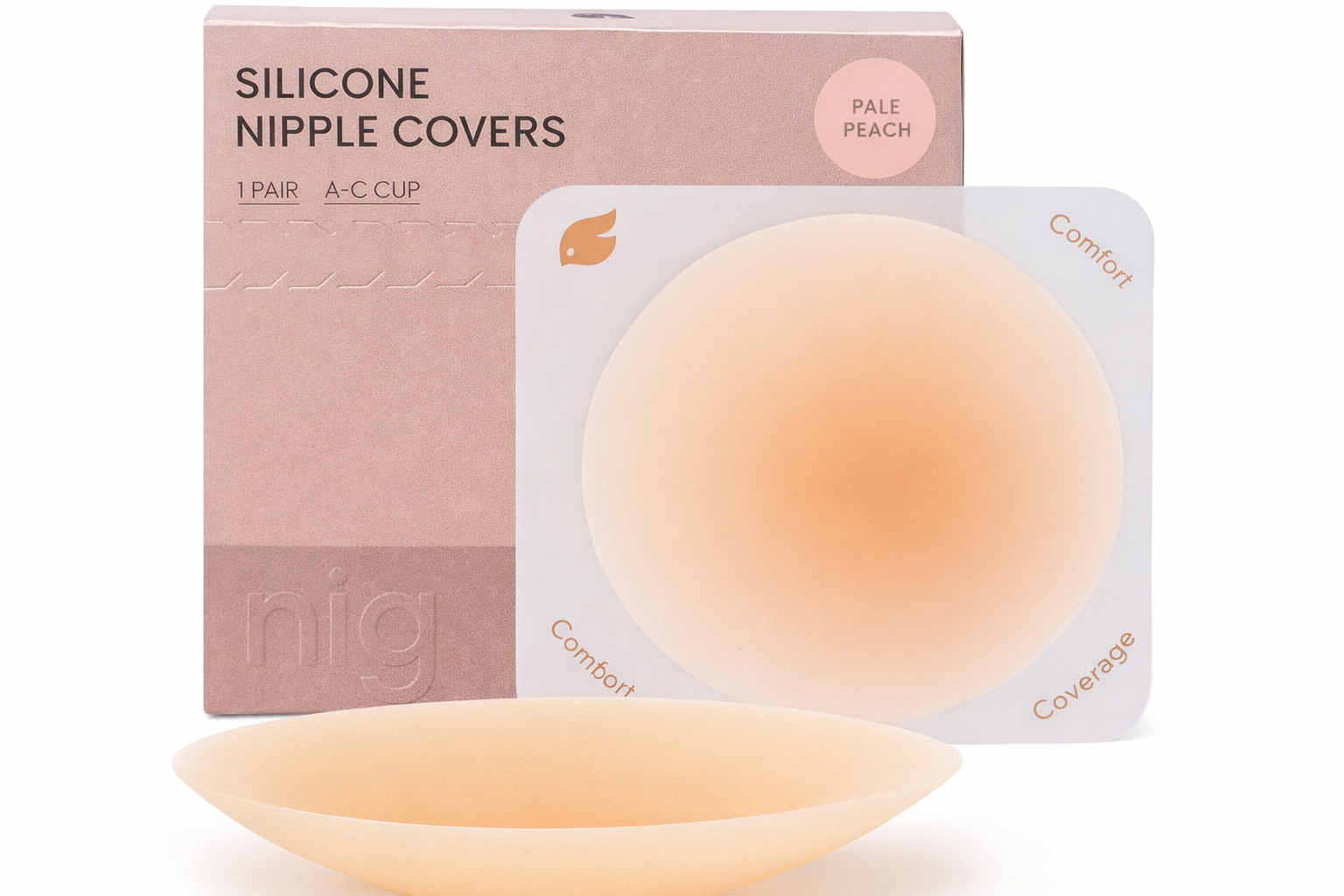
silicone sticky bras can be safe when made with medical-grade silicone, skin-safe adhesive, and controlled manufacturing processes. Product safety depends entirely on material selection, adhesive formulation, and production standards.
Behind every “safe” silicone sticky bra is not just a material choice, but a complete manufacturing system. Understanding how safety is achieved requires looking beyond the finished product and into raw materials, adhesive chemistry, and factory-level quality control.
What makes silicone sticky bras safe for skin contact?
Low-quality silicone products often cause itching, redness, or odor, leading to complaints and returns. These issues usually come from substandard raw materials or improper curing.
Silicone sticky bras are safe when produced using medical-grade or high-purity platinum-cured silicone combined with non-irritating adhesive systems.
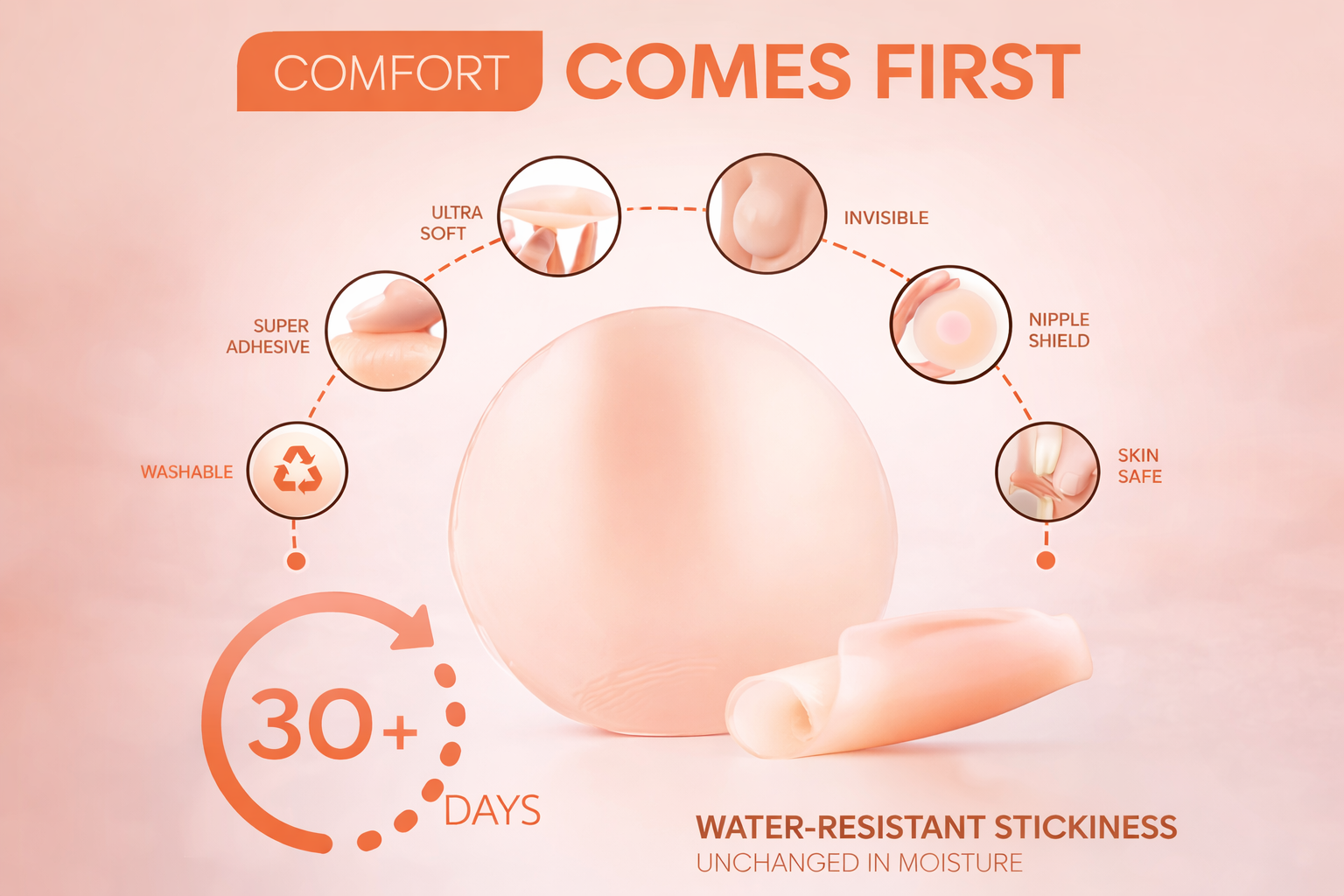
Silicone used in sticky bras is not all the same. High-quality products rely on platinum-cured silicone instead of peroxide-cured alternatives. Platinum curing produces silicone that is odorless, flexible, and stable when in contact with skin. This matters for prolonged wear, especially in warm or humid conditions.
Adhesive safety is equally important. Skin-safe adhesives are designed to maintain tackiness without causing chemical reactions on the skin surface. Proper formulation ensures adhesion without leaving residue or pulling the skin excessively during removal.
In professional manufacturing environments, incoming silicone is tested for elasticity, density, and odor before production begins. Adhesives are batch-tested for peel strength and skin compatibility. These steps reduce the risk of irritation and ensure consistency between samples and bulk orders.
Reliable factories also conduct repeated wash-and-reuse simulations. A safe sticky bra should maintain adhesion across dozens of uses without degrading or shedding adhesive layers. This stability is critical for maintaining both safety and user confidence.
Can silicone sticky bras cause skin irritation or allergies?
Many complaints originate from redness or itching after use. This raises concerns about allergic reactions.
Properly formulated silicone sticky bras are hypoallergenic and rarely cause reactions, while poorly made products can trigger irritation due to chemical residues.
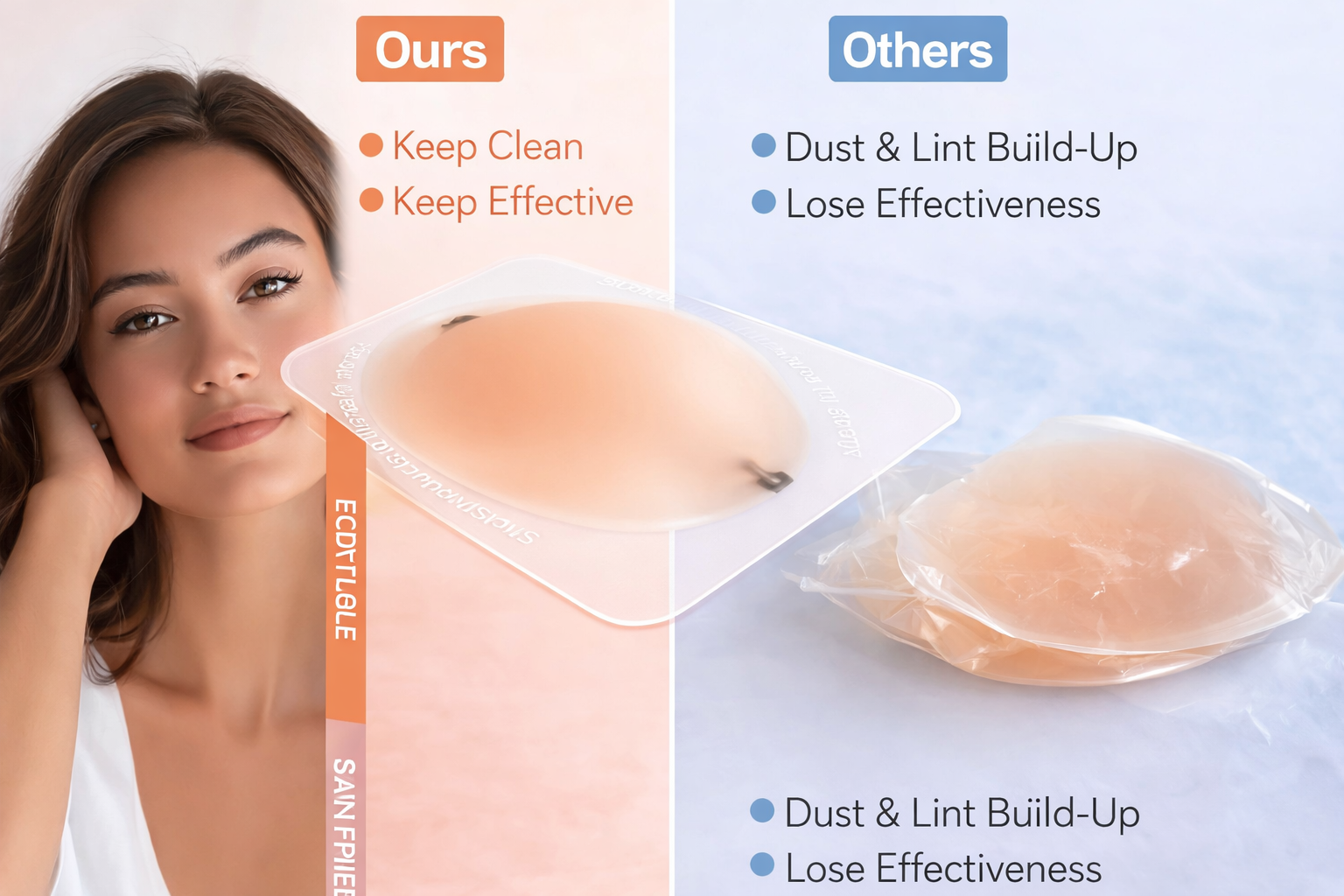
Silicone itself is biologically inert, which means it does not react with skin tissue. Most irritation issues come from adhesives, not silicone. Low-grade adhesives may contain solvents, unstable polymers, or impurities that break down under sweat or heat.
Manufacturers with strong technical control run skin-sensitivity simulations and material aging tests. These tests evaluate how adhesives behave after repeated exposure to moisture, friction, and body heat. Stable adhesives remain intact and do not migrate into the skin.
Another overlooked factor is curing time. Silicone that is rushed through curing may retain unreacted compounds, increasing the chance of skin discomfort. Mature factories use controlled curing ovens and extended curing cycles to eliminate residue.
Cleanroom-style assembly areas further reduce contamination. Dust, fibers, or oils introduced during production can interfere with adhesion and skin comfort. Process discipline is a key contributor to safety.
How does adhesive quality affect safety and performance?
Strong adhesion is often mistaken for safety. In reality, balance is critical.
Safe silicone sticky bras use controlled-tack adhesives that adhere securely without damaging skin or leaving residue.
Adhesive performance is measured in peel strength, shear resistance, and reusability. Excessively aggressive adhesives may hold firmly but can stress the skin, especially during removal. Weak adhesives fail under sweat or movement.
Professional manufacturers design adhesives that respond to body temperature. As skin warms, adhesion stabilizes rather than becoming brittle or overly sticky. This temperature-responsive behavior improves comfort and reduces injury risk.
Adhesive application is also a technical process. Even thickness distribution ensures uniform adhesion across the cup surface. Automated coating machines are used to maintain micrometer-level consistency, reducing weak spots or over-adhesive areas.
After coating, adhesive layers are protected with medical-grade release films to preserve tackiness until use. These films also prevent oxidation during storage, extending shelf life without compromising safety.
Does reusability impact safety over time?
Reusable products are cost-effective, but safety must remain stable after repeated use.
High-quality silicone sticky bras remain safe across multiple uses when adhesion stability and material integrity are properly engineered.
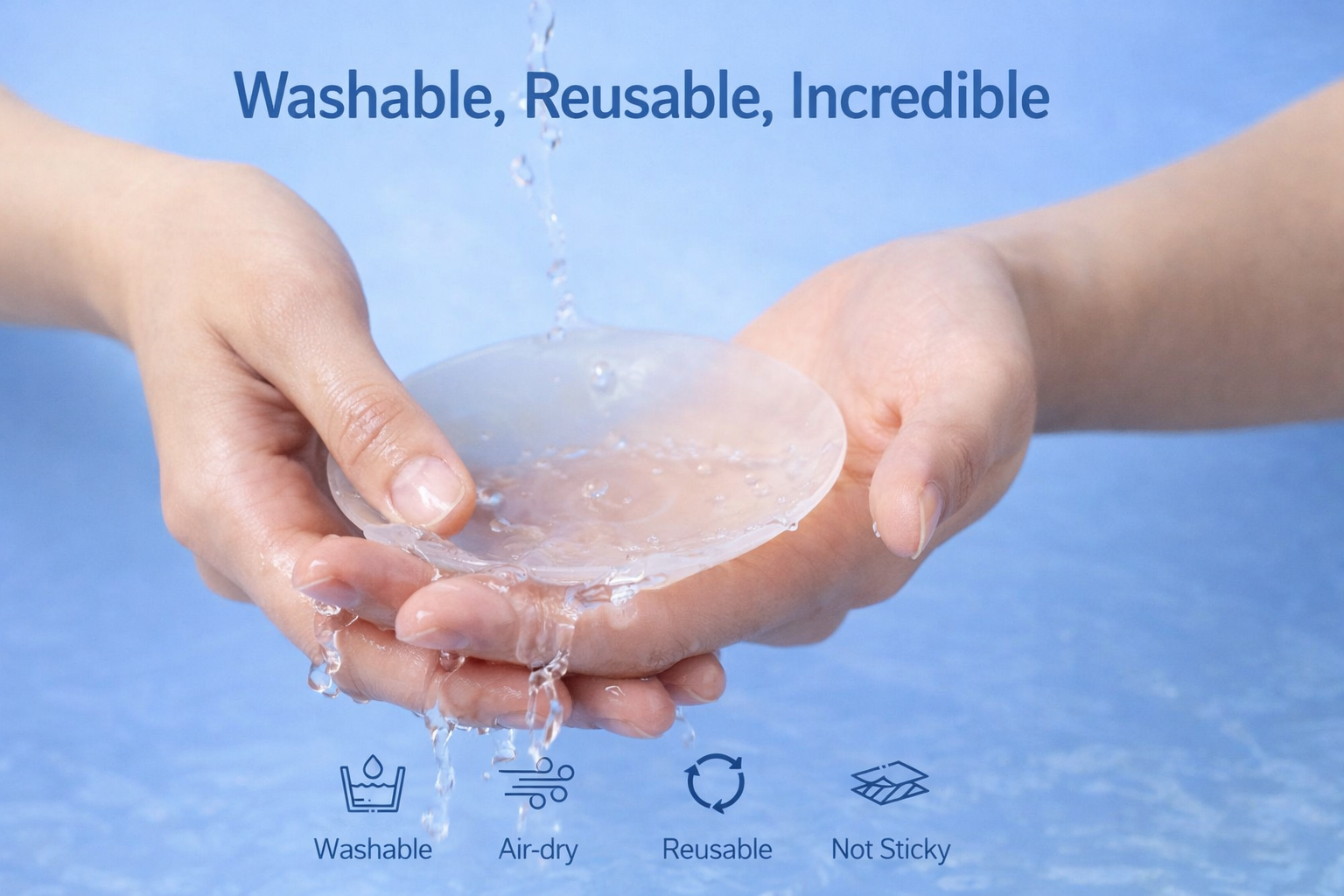
Reusability depends on how silicone and adhesive interact with water, soap, and friction. Inferior products degrade quickly, leading to uneven adhesion or adhesive shedding.
Professional designs embed adhesive directly onto the silicone surface rather than layering it superficially. This bonding method prevents delamination and maintains smooth edges even after repeated washing.
Wash-cycle testing simulates real consumer behavior. Products are repeatedly rinsed, air-dried, and reapplied to measure adhesion loss. Safe designs maintain predictable performance and do not release particles or residue.
Long-term safety also involves edge integrity. Poor edge finishing can cause peeling that exposes adhesive seams, increasing irritation risk. Precision trimming and molding techniques eliminate sharp or uneven edges.
How do factory processes influence product safety?
Safety cannot be added at the end. It must be built into production.
Controlled factory processes ensure silicone sticky bras meet consistent safety and performance standards from batch to batch.
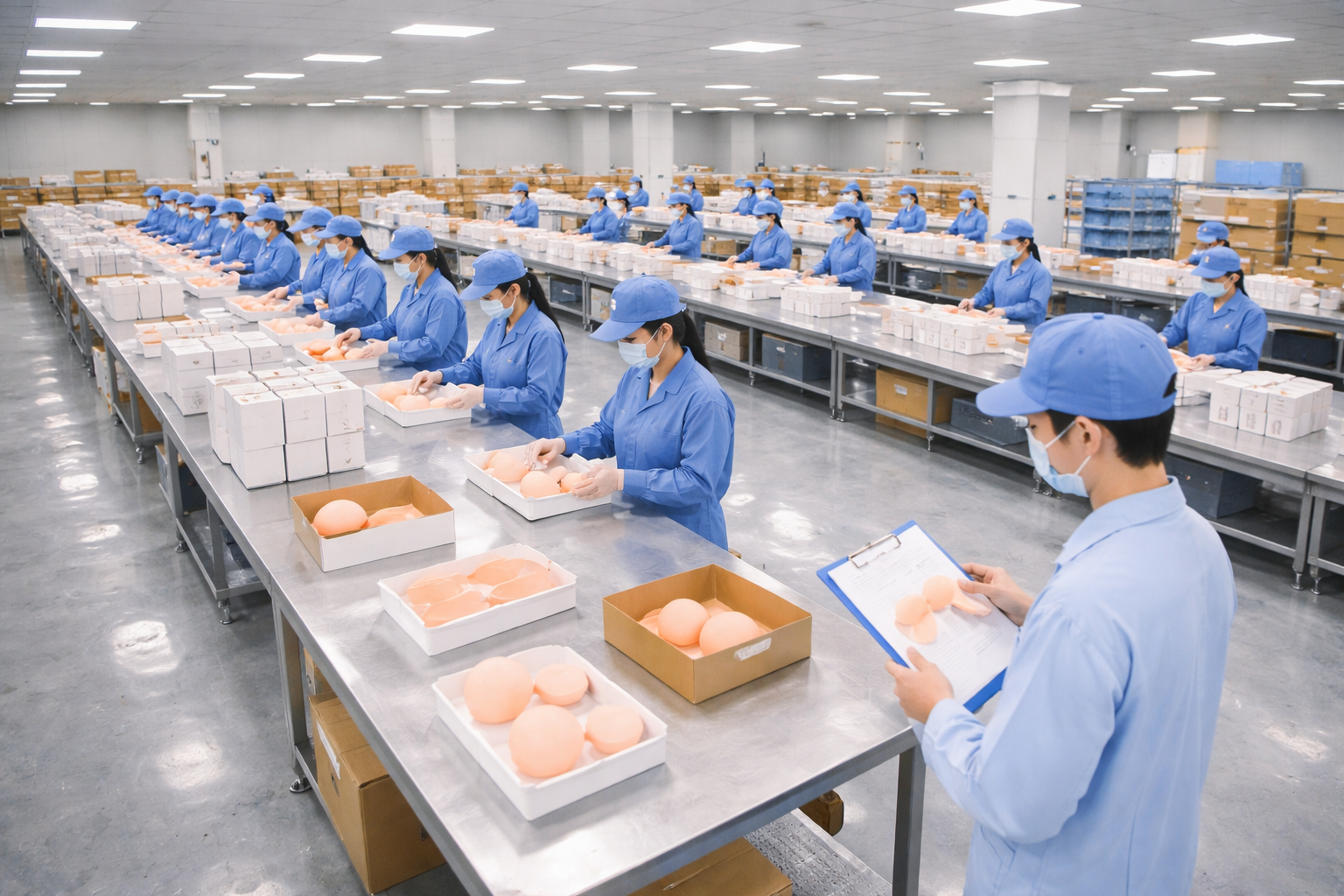
A professional manufacturing workshop is divided into functional zones: raw material storage, silicone molding, curing, adhesive coating, assembly, and inspection. Each zone operates under specific temperature and humidity controls.
Molding uses precision steel molds to ensure uniform thickness and shape. Consistent thickness prevents pressure points on skin and ensures even adhesion. After molding, silicone components undergo post-curing to stabilize elasticity and remove residual compounds.
Adhesive coating lines rely on automated systems rather than manual brushing. Automation reduces human error and ensures consistent adhesion strength across thousands of units.
Quality inspection includes visual checks, adhesion testing, tensile testing, and odor evaluation. Products failing any parameter are isolated and removed. This closed-loop quality system is essential for safety-driven manufacturing.
Are all silicone sticky bras on the market equally safe?
Market variety creates confusion. Price differences often reflect safety differences.
Not all silicone sticky bras are equally safe; safety depends on materials, adhesive formulation, and manufacturing discipline.
Products made without transparent material sourcing or standardized testing carry higher risks. Inconsistent batches, unverified silicone grades, and unstable adhesives can lead to unpredictable user experiences.
Factories with in-house design and material development capabilities can adjust cup shape, thickness, and adhesive distribution to improve comfort and safety. This technical flexibility separates engineered products from generic copies.
Experienced manufacturers also document production parameters, enabling traceability. If a quality issue arises, affected batches can be identified and corrected quickly.
Safety-focused production is not about a single feature. It is a system that integrates material science, process control, and inspection standards. This system approach is what ultimately determines whether a silicone sticky bra is safe for long-term use.
Conclusion
Silicone sticky bras are safe when engineered with medical-grade silicone, skin-safe adhesives, and disciplined factory processes. Material integrity, adhesive balance, and manufacturing control define long-term safety. Products developed within professional production systems offer stability, comfort, and reliability across repeated use, making safety a measurable outcome rather than a marketing claim.
