
A nipple cover factory can look professional online, yet poor adhesive, weak skin safety control, and unstable quality still cause returns, complaints, and lost repeat orders.
A good nipple cover factory is not judged by low price alone. It is judged by adhesive stability, skin-friendly materials, consistent shaping, accurate customization support, and the ability to turn samples into reliable bulk production.
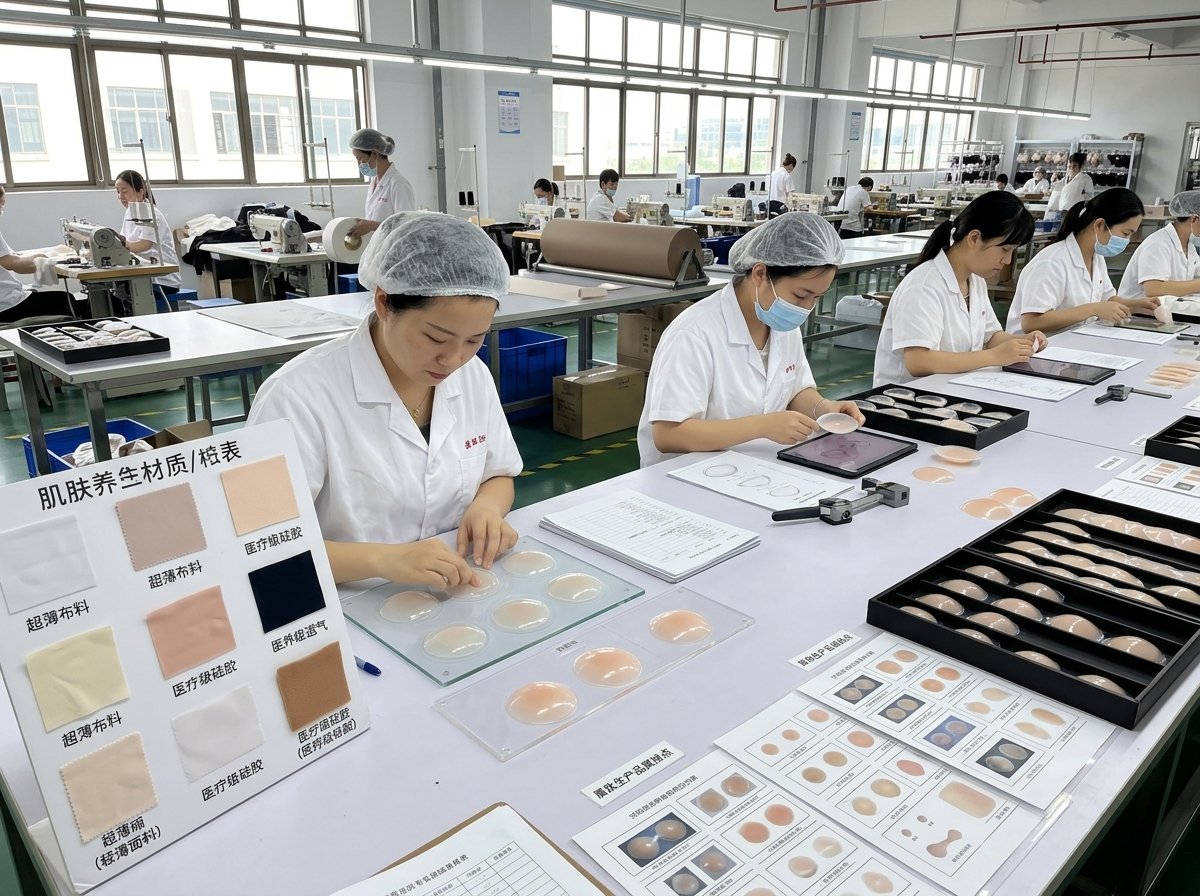
Many buyers already understand why OEM and ODM cooperation matters. It helps build a private label line faster. It makes packaging customization easier. It gives more control over price and positioning. Still, the hardest part is not deciding to work with a factory. The hardest part is choosing the right one.
This matters even more in nipple covers because the product touches skin directly. A small defect does not stay small. If the adhesive feels too aggressive, users complain about pain. If the surface traps sweat, users complain about itching or rash. If the edge is too thick, the product shows through clothing. If the adhesive weakens too fast, the product falls off and creates embarrassment. These are not minor issues. They directly affect reviews, reorder rates, and brand trust.
Why Is Choosing the Right Nipple Cover Factory So Difficult?
Many factories can produce a sample that looks good in photos. Fewer factories can deliver stable bulk production that performs well across different wear conditions.
The main challenge is that nipple covers seem simple, but the real quality depends on hidden details like adhesive balance, edge finishing, skin-contact materials, and repeat-use durability.
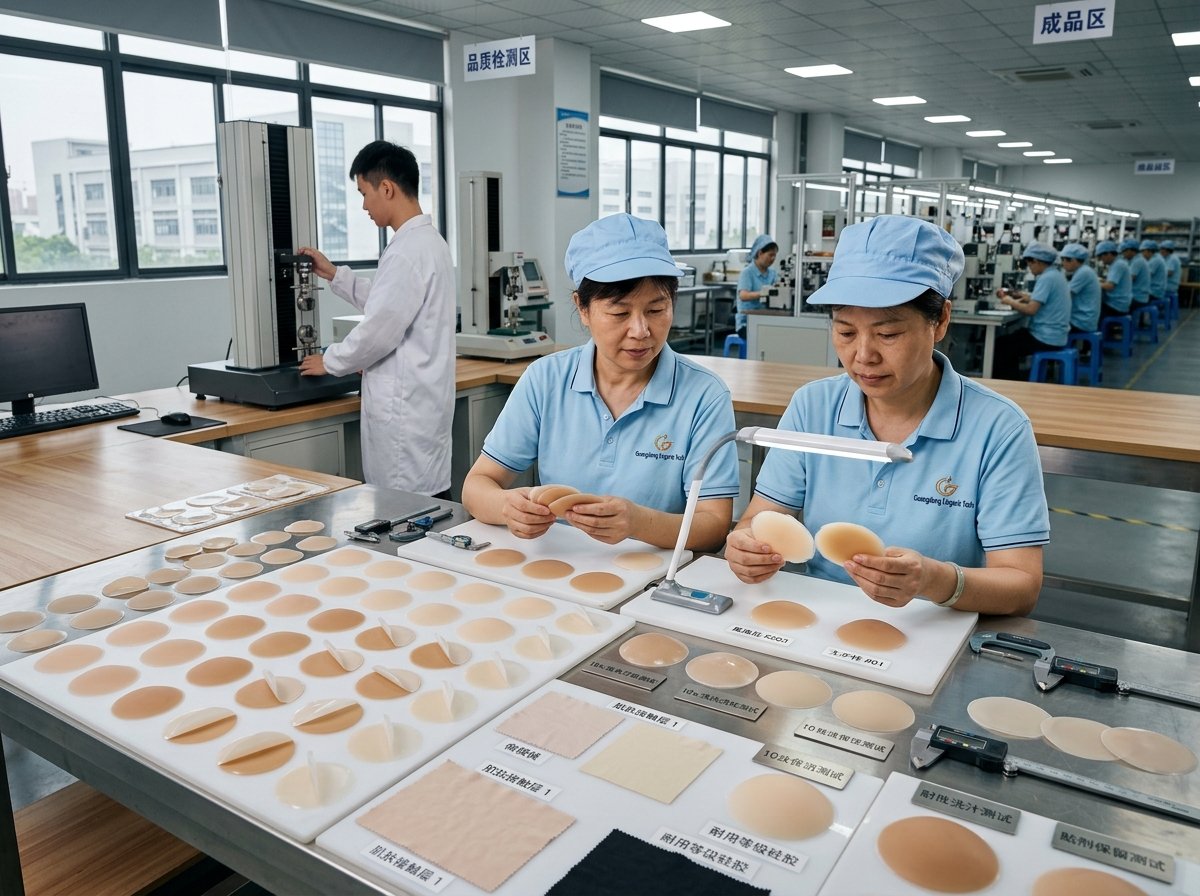
The market has already shown the same pain points many times. Public reviews often repeat a few core complaints: the product slips after sweating, feels uncomfortable after longer wear, irritates sensitive skin, loses stickiness after a few uses, or looks bulky under tight tops. Some users also complain that the product works only under very fitted clothes and becomes unreliable during movement. Others say the product looks fine at first but starts peeling at the edges later.
These repeated complaints tell a clear story. The category is not failing because buyers do not understand the product. It fails because too many factories treat nipple covers as a simple commodity instead of a skin-contact product that needs material, adhesive, and fit engineering.
A strong factory usually shows a different mindset. It talks about skin compatibility, sweat performance, edge tapering, storage film, mold precision, and real usage scenarios. That is often the first sign that the supplier understands the category.
How to Choose a Good OEM/ODM Factory for Nipple Covers?
A good factory should be able to explain not only what it makes, but why its product performs better and how it controls risk in real production.
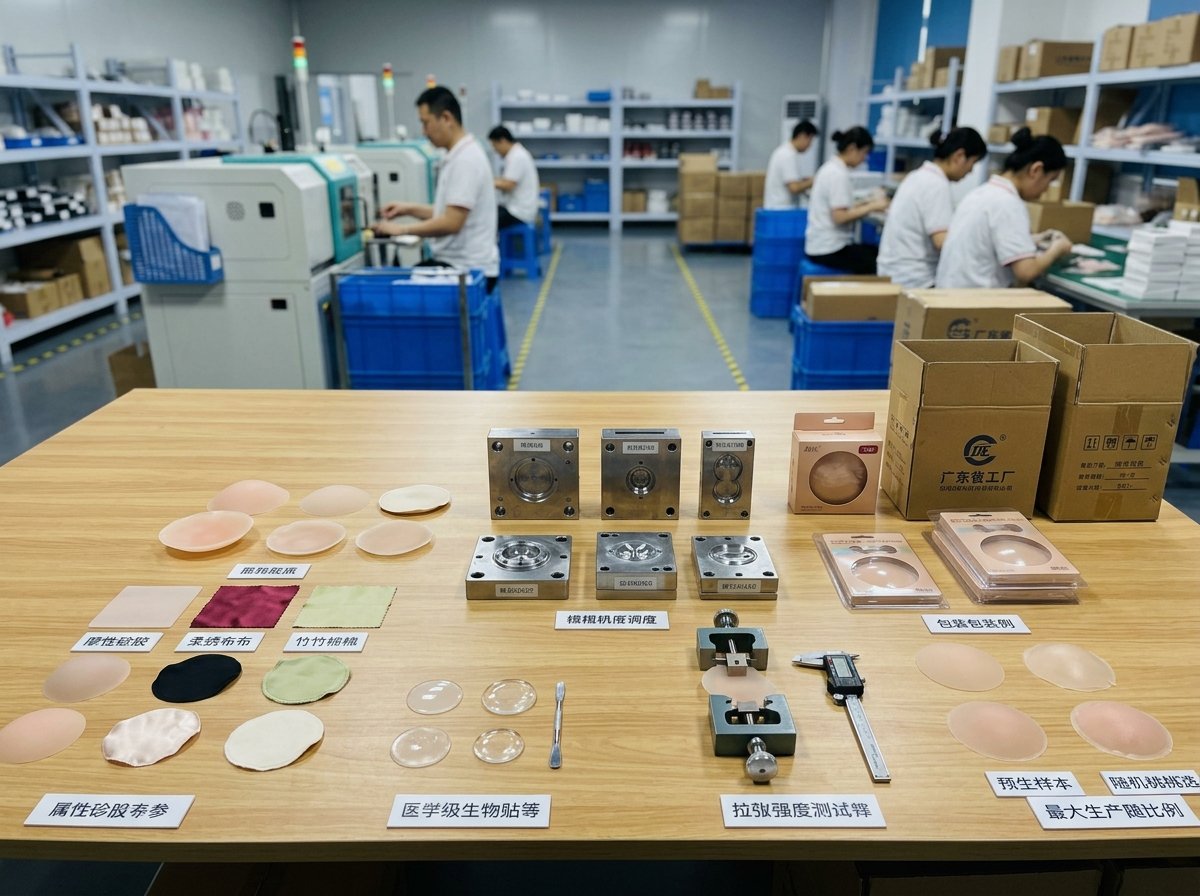
The best way to choose a nipple cover factory is to evaluate its control over materials, adhesive technology, mold accuracy, testing process, packaging support, and bulk consistency.
Buyers often compare price, MOQ, and lead time first. Those points matter. But in this category, price alone can hide future losses. A cheap product that causes poor reviews, refunds, or repeat complaints becomes expensive very fast.
Factory evaluation checklist
| Checkpoint | What to verify |
|---|---|
| Factory identity | Real manufacturer or only trading source |
| In-house design support | Ability to adjust shape, size, edge, and packaging |
| Adhesive development | Standard, stronger hold, or skin-friendly options |
| Material sourcing | Silicone grade, fabric layer, skin-contact materials |
| Testing capability | Sweat test, peel test, reuse test, skin check |
| Mold control | Stable thickness, symmetry, and edge precision |
| Packaging support | Private label boxes, pouches, instructions, warnings |
| OEM/ODM experience | Real project handling for established brands |
A reliable partner should also understand the different needs of brand owners, distributors, retailers, and sourcing teams. Some markets care most about skin sensitivity. Some care about hot-weather performance. Some care about low MOQ for test orders. Some care more about premium packaging and visual finish. A capable factory should not give the same answer to every project.
Factories with in-house design, R&D, and sales teams usually perform better here because development decisions are faster and more coordinated. This is especially useful when a project needs adhesive adjustment, new packaging, special colors, or fit corrections after the first sample.
What Are the Key Quality, Adhesive, and Material Standards for Private Label Nipple Covers?
Most product problems in this category come from three areas: materials, adhesive, and finishing. If one of them is weak, the final product feels unreliable.
For private label nipple covers, the most important standards are skin-friendly materials, balanced adhesive strength, smooth edge finishing, shape consistency, and realistic reusable performance.
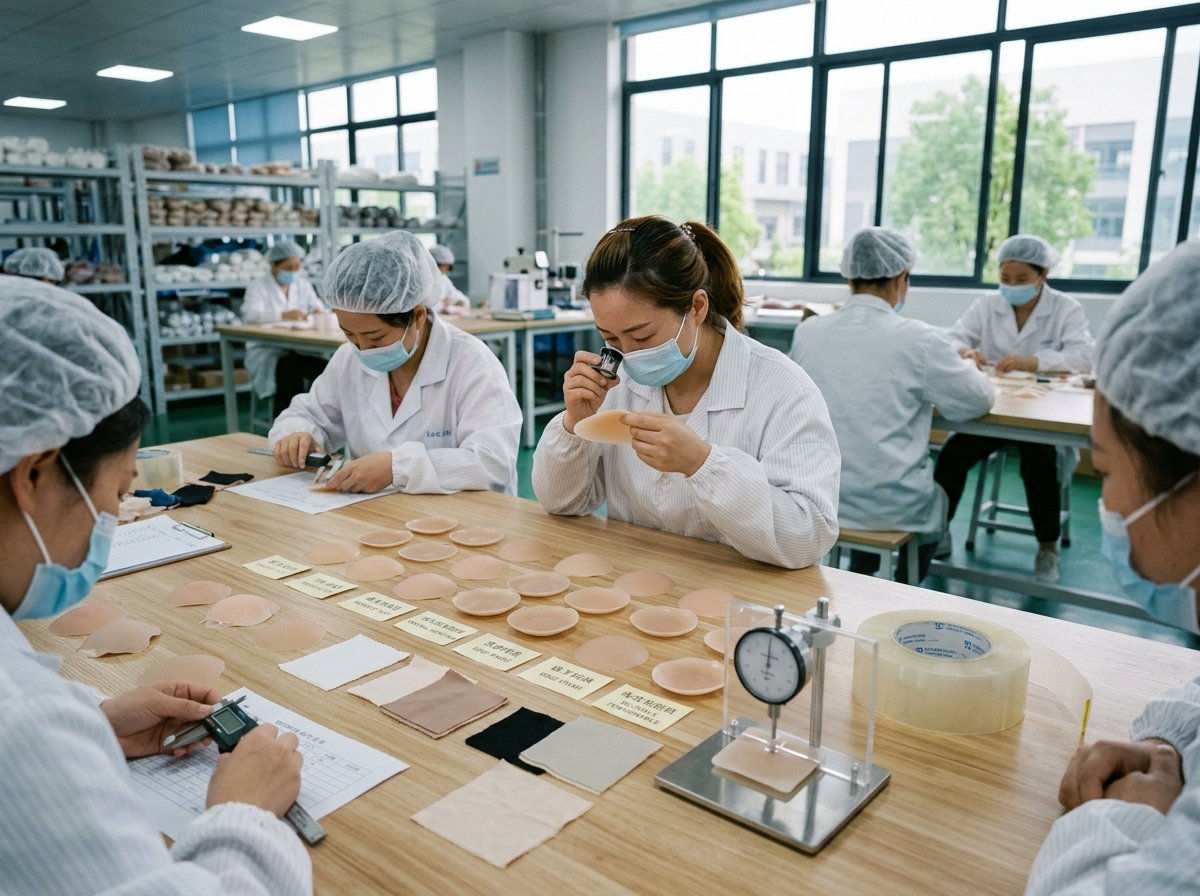
The product must stay on the body, but it must also feel safe on skin. This balance is where many low-end products fail. Some are sticky enough at first but painful to remove. Some remove gently but lose hold after light sweating. Some work for one use but fail badly on reuse because the surface attracts dust, fibers, and oil too quickly.
Core quality standards buyers should focus on
| Standard area | Why it matters |
|---|---|
| Skin-contact material safety | Helps reduce irritation and allergy complaints |
| Adhesive holding power | Helps prevent slipping and edge lift |
| Peel comfort | Helps reduce pain during removal |
| Reuse cycle stability | Supports true reusable claims |
| Edge thinness | Improves invisibility under clothing |
| Shape symmetry | Prevents poor appearance and uneven wear |
| Surface cleanliness | Affects hygiene and second-use experience |
| Storage protection film | Helps preserve adhesive performance |
The insights from market complaints make these priorities very clear. Users often mention slipping, irritation, rash, sweat build-up, old adhesive causing discomfort, and products that stop working after only a few tries. This means a serious factory should not only promise “stronger stickiness.” It should develop a more complete solution.
That includes adhesive formulas for normal wear and higher-sweat wear, softer edge transitions for tight outfits, better protection films for storage, and more honest labeling about wear time and reuse limits. A factory with experience supplying well-known brands as an OEM or ODM partner often has stronger systems for this because such customers usually demand tighter consistency and better material records.
Why Do Adhesive and Skin Comfort Matter More Than Marketing Claims?
Many brands sell nipple covers with very strong before-and-after language. But the product category has already built trust problems in the market because real use often does not match those promises.
The factory must build performance first, because no level of marketing can hide weak adhesive, skin irritation, or obvious edges once the product reaches the final user.
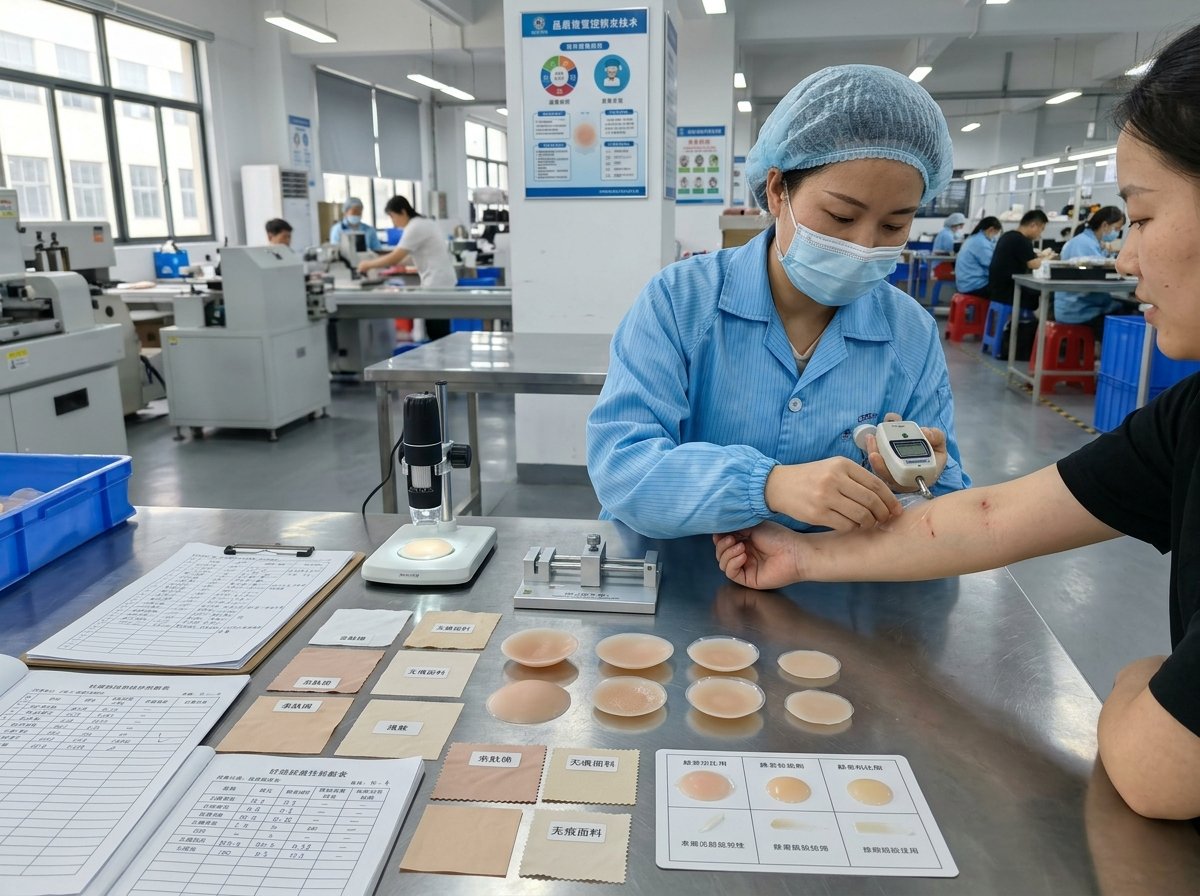
This category creates emotional complaints very fast. A user may feel anxious if the product starts sliding under clothing. A user may feel disappointed if it works only under very tight tops. A user may feel angry if removal hurts or leaves redness. In many public reviews, this is exactly what happens. A simple quality problem becomes a trust problem.
That is why adhesive development must include both performance and comfort.
Important adhesive-related tests
| Test | Purpose |
|---|---|
| Initial tack test | Measures first-contact grip |
| Wear duration test | Measures hold over several hours |
| Sweat condition test | Measures stability in heat and humidity |
| Reuse test | Measures performance after cleaning |
| Peel force test | Measures removal comfort |
| Surface contamination test | Measures response to lint, dust, and oils |
A good factory should also guide buyers on product positioning. Some nipple covers are best for light daily coverage. Some are designed for special occasions. Some suit fitted dresses better than loose tops. When a factory clearly explains these differences, it usually shows a more mature development mindset.
Questions Buyers Should Ask Before Developing Custom Nipple Cover Products
Many poor projects begin because the wrong questions are asked at the start. Instead of asking only for price and MOQ, buyers should ask questions that reveal how the factory thinks.
The right questions should test the factory’s ability to manage quality, customization, skin safety, adhesive performance, and repeatability from sample to mass production.
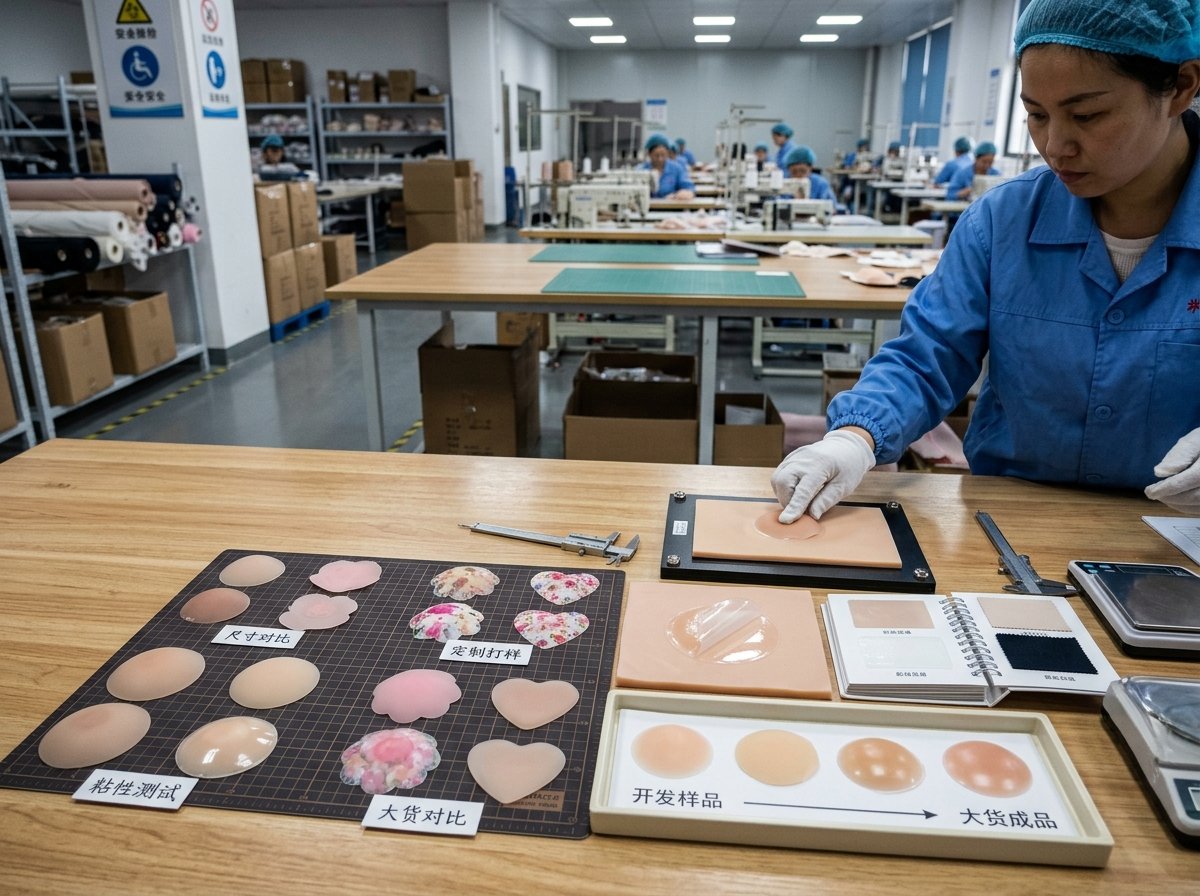
Key questions to ask before sampling
| Question | What the answer should reveal |
|---|---|
| What materials are used on the skin-contact side? | Material transparency and safety awareness |
| What adhesive options are available? | Ability to match different market needs |
| How many times can the product realistically be reused? | Honesty about durability |
| How is adhesive performance tested? | Real quality control depth |
| Can shape, thickness, and diameter be customized? | Mold and design flexibility |
| How are edge thickness and symmetry controlled? | Production precision |
| What packaging options are available? | Private label readiness |
| How are complaints about irritation or slipping handled? | After-sales support mindset |
| Has the factory supplied established brands before? | Experience with higher standards |
| Can sample and bulk quality be matched? | Consistency control |
These questions often expose the difference between a supplier that only wants the order and one that can support long-term cooperation. A strong factory answers clearly. It explains trade-offs. It suggests the right structure for the target market. It does not promise that one product works perfectly for every skin type, climate, and outfit.
What Warning Signs Suggest a Factory May Not Be Reliable?
Poor supplier choices usually show warning signs early. The problem is that many buyers ignore them when pricing looks attractive.
Common danger signs include vague material answers, unrealistic reusable claims, no clear testing process, inconsistent sample quality, and no real guidance on usage or limitations.
Common red flags
| Red flag | Why it matters |
|---|---|
| No clear material breakdown | May hide low-grade inputs |
| No test data or test process | Quality claims may be empty |
| Overpromised reuse numbers | Future complaint risk is high |
| Same solution for every market | Weak product understanding |
| No warning for sensitive skin | Poor skin-contact awareness |
| Unclear sample-to-bulk control | Risk of inconsistent production |
| Very thick edges in samples | Poor invisibility under clothing |
| Weak packaging protection | Adhesive may degrade before use |
When a factory avoids detail, it often means the project risk is being pushed onto the buyer. In skin-contact categories, that becomes dangerous very fast.
Why Do Experienced OEM/ODM Factories Create Better Long-Term Results?
A capable factory does more than make products. It helps reduce mistakes before bulk production begins.
Factories with real OEM and ODM experience often create better results because they understand product performance, private label requirements, bulk consistency, and the complaint patterns already common in the market.
An experienced plant usually supports the project across material selection, shape recommendations, adhesive matching, packaging development, and production control. That creates a stronger path from idea to stable shipment. It also matters for buyers who want to work with a real factory instead of a source that only passes messages between different parties.
Factories with in-house design, R&D, and sales capabilities usually solve problems faster. They can revise diameter, taper the edge, soften the adhesive feel, improve packaging protection, and adjust lead time planning more smoothly. For private label customers, this reduces risk and makes future expansion easier.
Conclusion
Choosing a good nipple cover factory is really about choosing stable quality, honest development support, and long-term reliability. The strongest OEM and ODM partners are real factories with in-house design, R&D, and sales teams, strong control over materials and adhesive systems, and real experience serving established brands. For private label buyers who want fewer complaints, stronger product trust, and more repeat business, the right starting point is a factory inquiry built around target market, wear scenario, packaging needs, and performance expectations.
