
Adhesive bra quality fails in the same few ways again and again: weak stickiness, painful removal, fake lift, wrong sizing, visible edges, and bulk orders that do not match the sample.
Quality control for adhesive bra products must focus on adhesive stability, skin-contact safety, fit consistency, edge finishing, durability, and packaging accuracy. Strong factory QC reduces falling off, irritation, poor shaping, size mismatch, and repeat complaints across Amazon, Reddit, YouTube, Trustpilot, and social platforms.
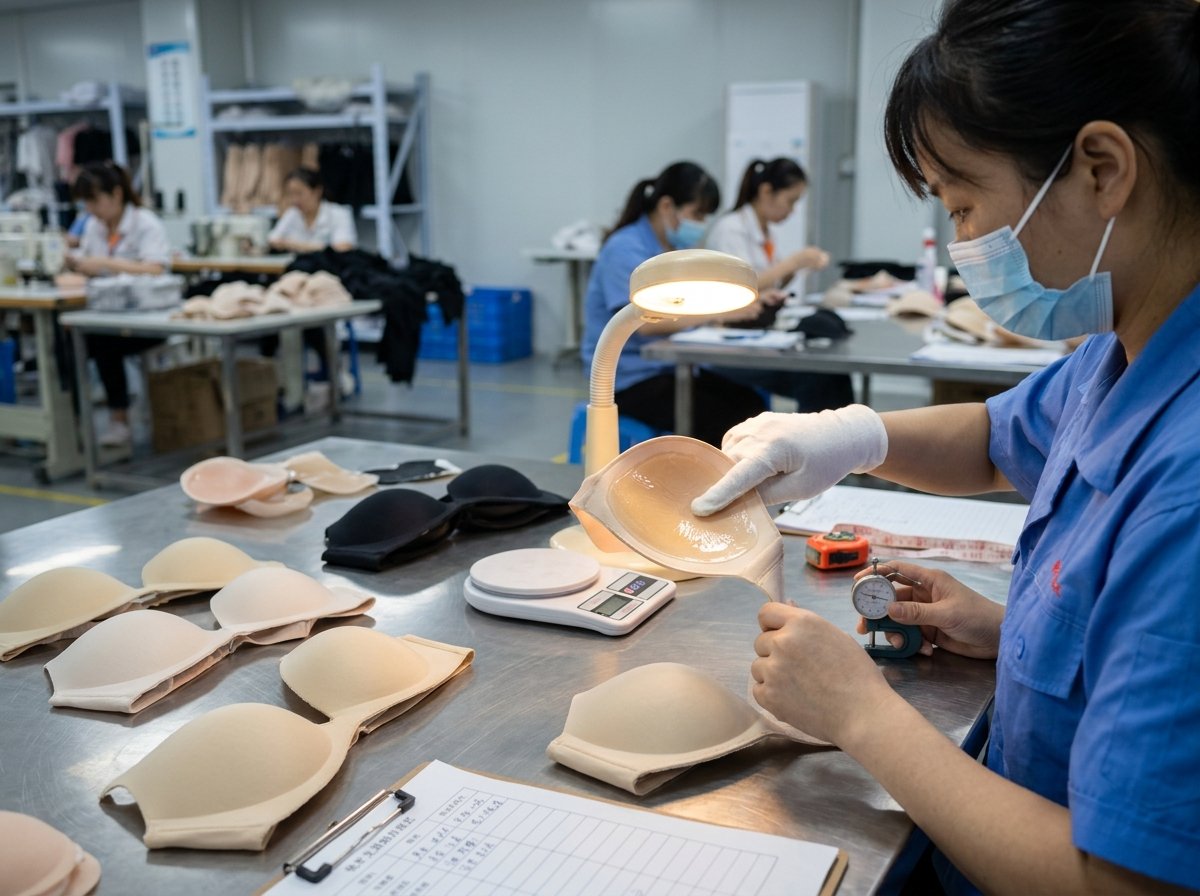
The market feedback is already clear. End users do not complain in random ways. The same issues appear across many channels: “it fell off,” “it hurt to remove,” “it did not lift,” “the size was too small,” “the edges showed under clothes,” and “it only worked once.” That means adhesive bra quality control cannot be limited to appearance inspection. It must cover real use conditions, including sweat, movement, skin contact, long wear, and reuse.
Why Is Quality Control So Important for Adhesive Bra Products?
Many adhesive bras look acceptable in photos, but real wear quickly exposes hidden defects. A product can appear smooth in the package and still fail after body heat, sweat, and movement.
Quality control matters because adhesive bras are skin-contact products that must perform across fit, comfort, hold, safety, and appearance at the same time.
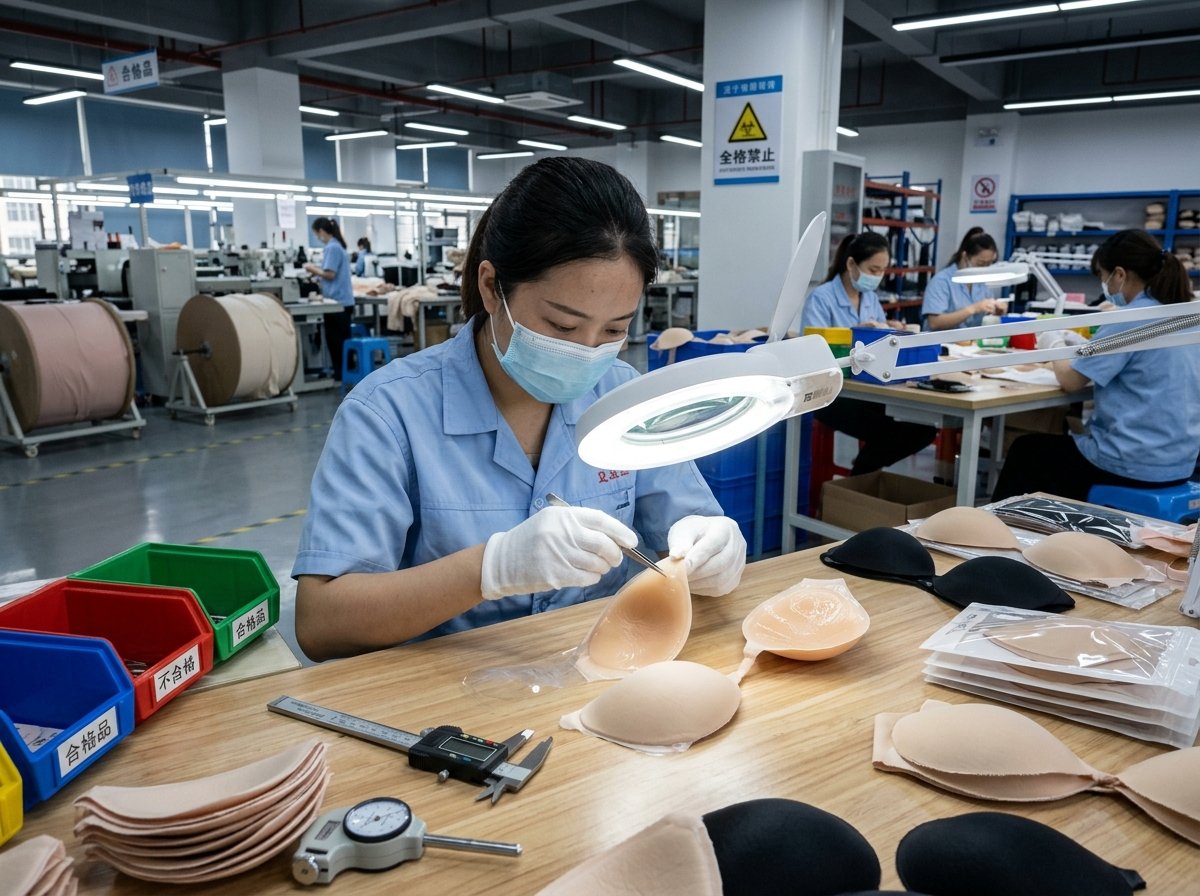
The industry pain points provided in the insights show a very stable pattern. Users complain about poor adhesion in dance or wedding settings, weak support for fuller busts, irritation after sweating, false marketing around “lift,” and bulk or bulky cups that create an unnatural shape. These are not small issues. They lead directly to returns, platform complaints, chargebacks, and brand distrust.
For this reason, a real factory should treat adhesive bra QC as a full system. It should begin with incoming material control, continue through mold and adhesive processing, and end with finished-product testing, packaging checks, and shipment review. Factories with in-house design, R&D, and sales teams usually manage this better because product development and quality standards stay connected. That is especially important in OEM/ODM projects for brand owners, distributors, buyers, and factories that need stable repeat orders rather than one-time sales.
Key Quality Inspection Standards for Adhesive Bra Products?
Poor inspection standards create the most common market failures: cups that do not match, adhesive that weakens too fast, edges that lift, or products that feel too harsh on skin.
The core inspection standards for adhesive bra products include material verification, adhesive consistency, size accuracy, appearance quality, pair matching, wear stability, and packaging correctness.
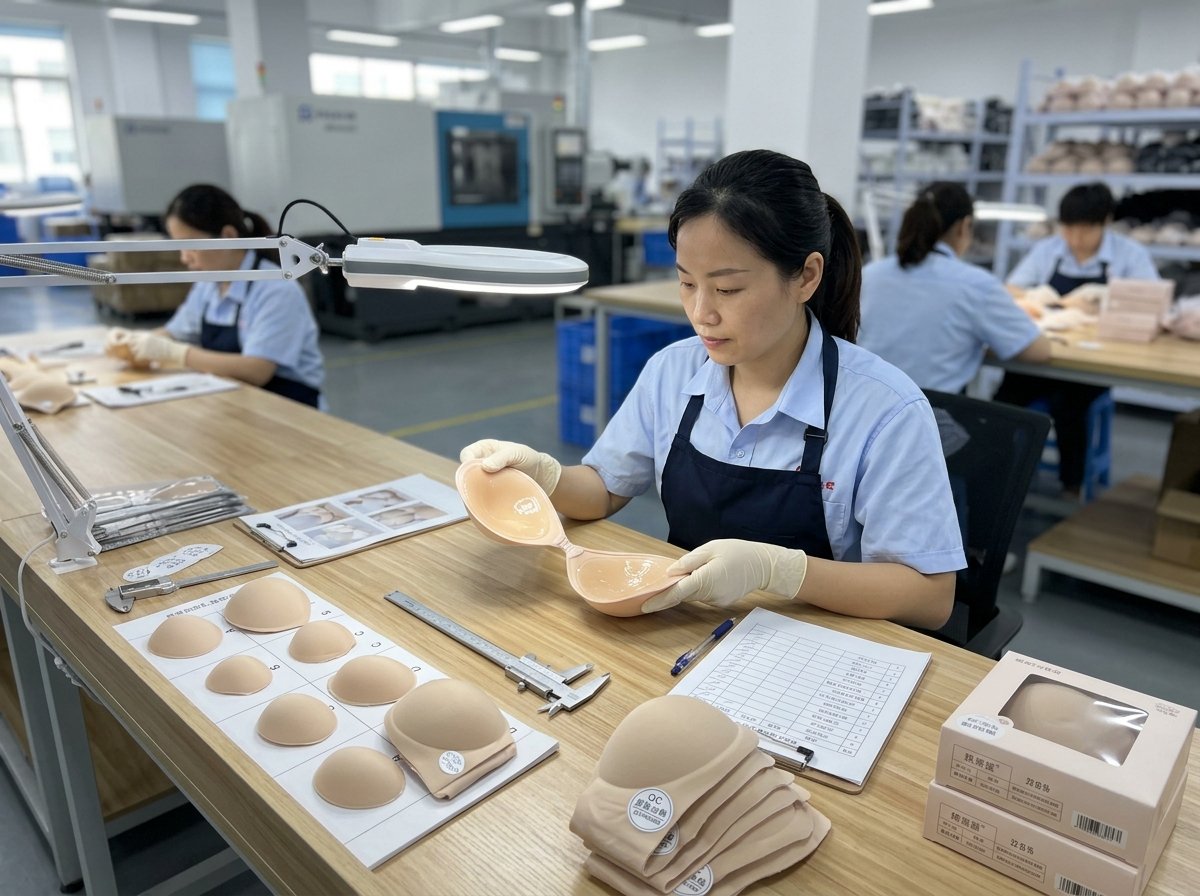
A useful QC system should divide inspection into clear stages.
Incoming material inspection
Before production starts, the factory should inspect:
- silicone or PU base material
- adhesive formula batch consistency
- release film quality
- fabric or accessory components
- packaging material color and print accuracy
If raw materials vary, finished performance will vary too. Many complaints about “sample was good but bulk was bad” start here.
In-process inspection
During production, the factory should check:
- mold forming consistency
- cup thickness distribution
- edge taper accuracy
- adhesive coating uniformity
- curing and bonding stability
- protective film alignment
Finished goods inspection
Before packing, the factory should review:
- cup symmetry
- matched pair control
- edge smoothness
- no dust or contamination on adhesive
- correct size and color
- correct logo and packaging inserts
| QC Area | Main Inspection Point | Risk if ignored |
|---|---|---|
| Material | Silicone, glue, release film | Batch variation, odor, poor wear |
| Structure | Cup depth, shape, edge | Fake look, bad fit, visible outline |
| Adhesive | Tack, hold, peel force | Falling off, pain, residue |
| Pairing | Left-right matching | Uneven appearance, customer complaints |
| Packaging | Labels, barcode, insert | Wrong shipment, return disputes |
A factory is not just producing goods. It is also protecting the brand from preventable complaints. That is why factories with strong OEM/ODM experience usually put more detail into inspection records, test reports, and sample-to-bulk control.
Common Defects in Adhesive Bras and How Factories Prevent Them?
The most repeated market complaints can be grouped into a few technical defect types. Once these are defined clearly, prevention becomes much easier.
Common adhesive bra defects include poor stickiness, edge lifting, false lift effect, skin irritation, size mismatch, visible outlines, short reuse life, and packaging mistakes.
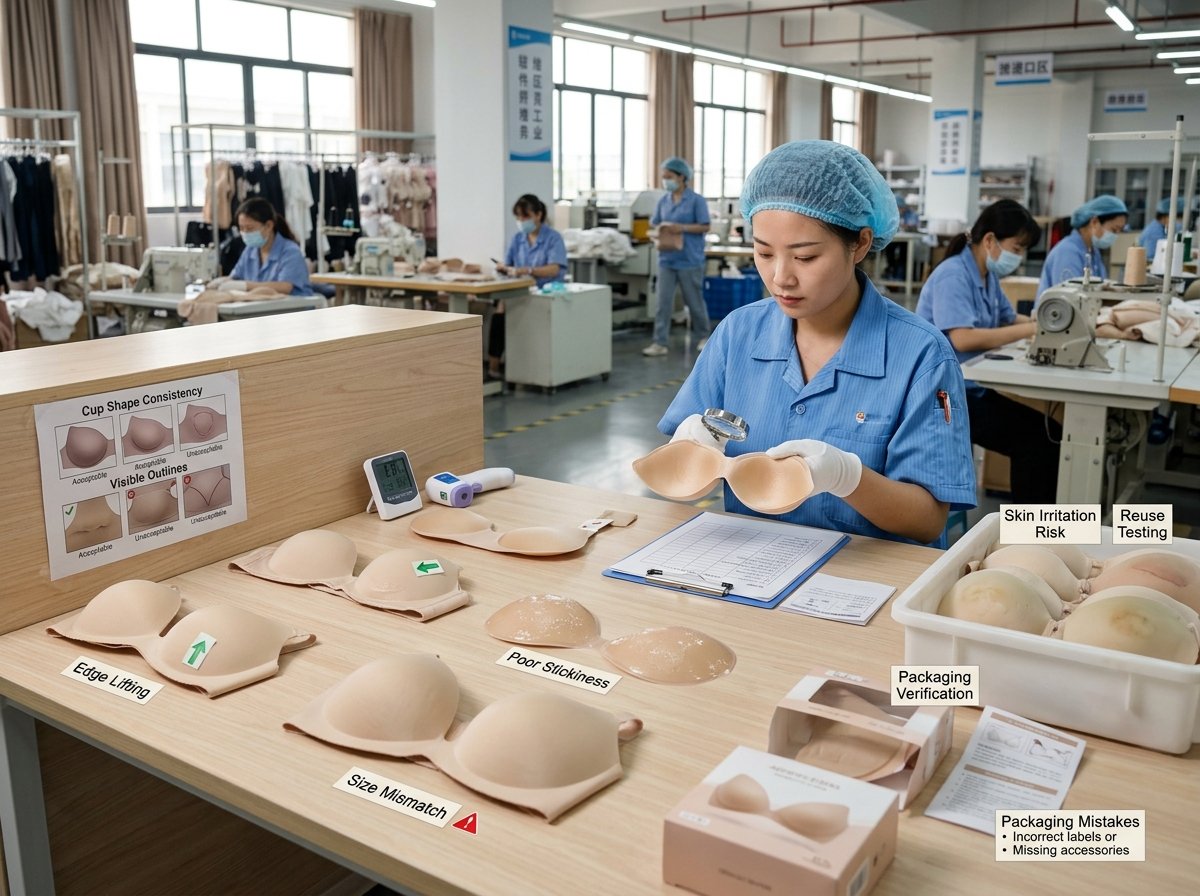
The user insights show strong consistency across Reddit, Amazon, Instagram, YouTube, Facebook, and review sites. The same product category problems appear again and again.
Main defect categories
| Defect | What users experience | Likely cause | Factory prevention |
|---|---|---|---|
| Falls off quickly | Drops after sweat or movement | Weak adhesive, poor fit curve | Upgrade adhesive and test dynamic wear |
| Edge lifting | Corners peel up | Thick or stiff edge | Use feather edge and improve taper control |
| No real lift | Looks flat or saggy | Wrong cup structure | Separate coverage, cleavage, and lift designs |
| Painful removal | Skin pulling, bruising | Peel force too high | Balance adhesion and removal comfort |
| Skin irritation | Itching, rash, redness | Harsh glue or poor breathability | Use skin-friendlier adhesive and patch testing |
| Wrong size | Too small, odd shape | Poor size grading | Rebuild size standards and real-fit database |
| Not reusable | Works once only | Weak adhesive recovery | Test wash-and-reuse cycles honestly |
| Bulky outline | Obvious under tight clothes | Cup too thick, bad edge finish | Thin edge design and better mold control |
A strong factory should not only record these defects. It should build prevention into product design and production SOP. For example, if edge lifting is a common complaint, the solution is not simply “make it stickier.” It may require thinner tapering, softer edge flexibility, and better cup curvature. If users report fake cleavage or no support, the problem is often mold geometry, cup weight, and force direction, not just adhesive.
Factories that have worked with famous brands as OEM/ODM partners often approach this more systematically. They create separate product lines instead of one general-purpose item. That can include coverage-only styles, natural-shape styles, stronger cleavage options, summer versions, bridal versions, and fuller-bust versions.
How to Test Adhesion, Skin Contact Safety, and Durability for Sticky Bras?
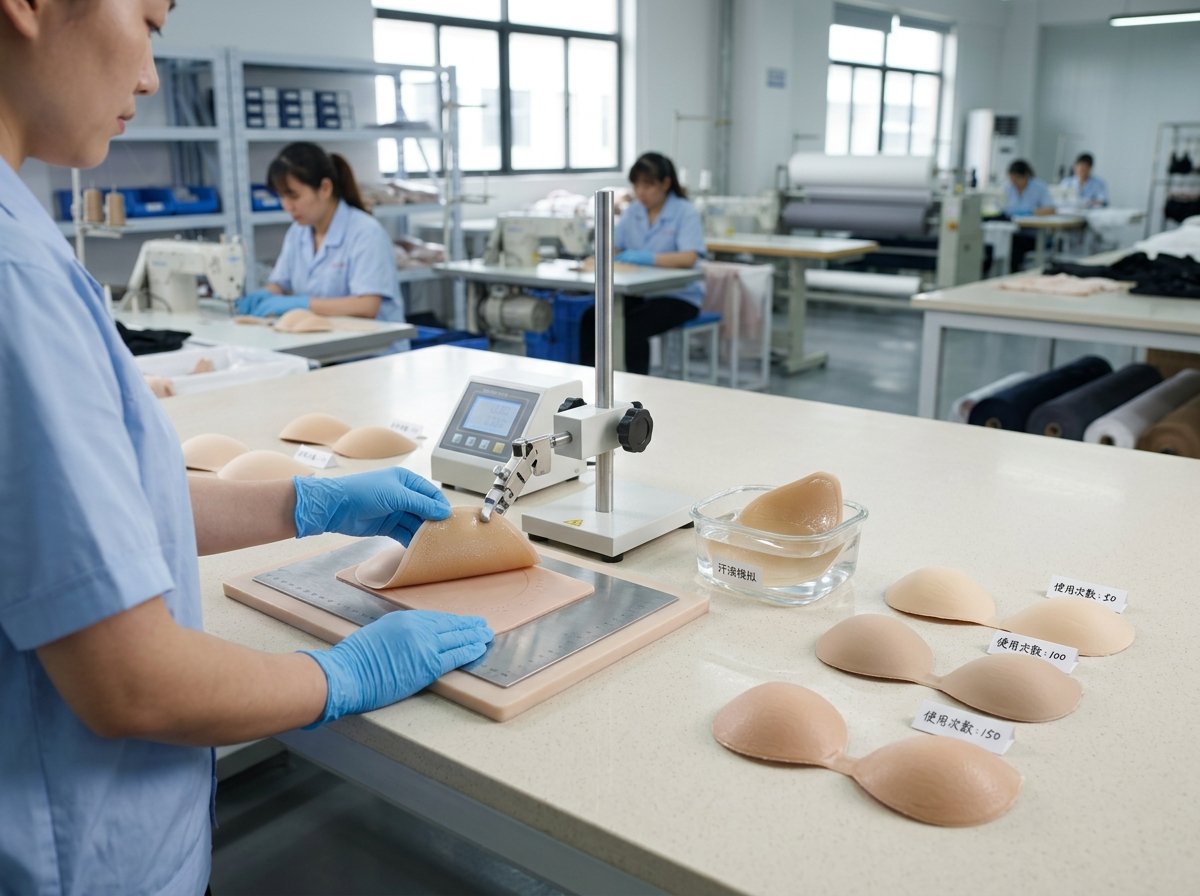
Testing should cover initial tack, all-day hold, sweat resistance, peel comfort, skin compatibility, and multi-use durability under controlled and repeatable conditions.
Many low-grade products perform well for a few minutes and fail later. That is why real test standards need more than one result point.
Adhesion testing
A proper adhesion test should include:
- initial adhesion after application
- holding power after body heat exposure
- shear resistance during movement
- performance after sweat simulation
- edge lift rate after hours of wear
The insights provided show repeated complaints about products failing during dancing, sweating, walking, stair climbing, and rave or wedding use. This means factories should add movement-based tests, not only flat-surface lab checks.
Skin contact safety testing
Skin-contact safety should include:
- patch test for irritation risk
- peel-force evaluation
- long-wear heat and sweat skin reaction review
- contact surface cleanliness control
- warnings for sensitive skin and damaged skin
Many negative reviews mention itching, burning, rashes, red marks, blisters, or skin peeling. That shows why “strong adhesive” cannot be the only goal. A better factory target is controlled adhesion: enough to hold, but not so aggressive that removal damages skin.
Durability and reuse testing
A reusable claim must be verified through:
- wash-and-dry cycle testing
- tack recovery after cleaning
- dust and fiber contamination resistance
- release film protection performance
- storage stability
| Test Type | What it proves | Why it matters |
|---|---|---|
| Initial tack | First-use success | Reduces immediate failure |
| Shear hold | Movement stability | Prevents slipping and falling |
| Sweat test | Heat and moisture resistance | Critical for summer and event use |
| Peel-force test | Removal comfort | Reduces pain and skin complaints |
| Patch test | Skin compatibility | Important for sensitive users |
| Reuse cycle test | Adhesive recovery | Supports repeat-use claims |
A factory with in-house R&D can set these test methods earlier in development, not only after complaints start. That shortens improvement cycles and gives buyers more confidence during sampling.
How Do Factories Control Fit, Shape, and Size Consistency?
Many users say adhesive bras look weird, flatten the bust, create fake cleavage, or do not fit larger cup sizes. This is often a structure problem, not just a glue problem.
Fit consistency depends on mold shape, cup depth, edge profile, size grading, left-right symmetry, and whether the product was designed for the actual target bust range.
A common industry mistake is scaling one mold up and down for all sizes. That often creates bad results for fuller, bottom-heavy, tear-drop, or wider-set bust shapes. The insights provided showed many complaints from larger-bust users saying the products did not support, did not fit, or simply looked wrong.
Fit-related QC points
- cup width and depth tolerance
- edge thickness consistency
- center connection alignment
- shape symmetry between left and right cups
- correct size grading between cup levels
- breast-shape-based version planning
Factories with stronger technical ability usually build multiple mold families instead of forcing all sizes into one pattern. This matters for private label buyers who want fewer returns and better reviews. It also matters for long-term brand building. A product that only looks good in a studio sample but fails on real bodies creates more damage than a simple commodity item.
What Packaging and Accessory Checks Are Required for Adhesive Bra Orders?
Packaging mistakes create more complaints than many buyers expect. In this category, packaging protects both function and trust.
Packaging QC should verify hygiene protection, correct labeling, matched accessories, storage performance, and clear instructions for application, cleaning, and removal.
Many complaints in the insights involve wrong sizes, mismatched pairs, unclear reuse expectations, and hygiene concerns. Some users worry about whether the product has been tried on, while others receive mixed pieces that do not match.
Packaging QC checklist
| Item | What to check | Why it matters |
|---|---|---|
| Release film | Full coverage, clean placement | Protects adhesive before use |
| Pair matching | Same size, same shape, same color | Prevents uneven wear |
| Barcode and label | SKU accuracy | Reduces wrong shipment |
| Insert card | Correct instructions | Lowers misuse and complaints |
| Storage case or pouch | Clean and protective | Supports reuse and hygiene |
| Outer box | Print accuracy and tamper safety | Improves retail trust |
Strong factories usually connect packaging QC with product QC. That is because bad packaging can damage a good product. Dust on adhesive, crushed cups, missing films, or poor insert instructions can all turn a passable item into a return.
How Can a Factory Build a Better QC System for Adhesive Bra Projects?
A better QC system does not start at final inspection. It starts at product definition and continues through every stage.
The strongest adhesive bra QC systems connect development, raw material control, in-line inspection, wear testing, and final packaging review into one repeatable process.
Factories that only inspect finished goods usually react too late. A stronger method is preventive control.
Practical factory QC framework
- Define the product honestly: coverage, cleavage, or lift
- Match material and adhesive to wear scene
- Create clear size and mold standards
- Test under heat, sweat, and movement
- Control batch consistency during bulk production
- Protect the product through packaging and storage
- Keep sample and bulk standards the same
This approach works best when the supplier is a real factory, not only a trading company. A factory with in-house design, R&D, and sales teams can adjust molds, adhesive systems, edge structure, and packaging details faster. It can also support OEM/ODM projects for brand owners, distributors, buyers, and factories that need stable manufacturing, not only quotations.
Past cooperation with well-known brands also matters here. That experience usually improves documentation, development logic, testing discipline, and shipment control. In a category where end users are quick to post public complaints, that experience becomes a practical advantage.
Conclusion
Adhesive bra quality control must go far beyond visual inspection. For projects that need stronger QC, safer skin contact, better durability, and more stable OEM/ODM production, send an inquiry and leave contact details to start cooperation.
