
Adhesive bras promise freedom and invisibility, yet improper use often leads to slipping, skin discomfort, or poor shaping. Most issues come from usage mistakes rather than the product itself.
An adhesive bra works best when applied on clean, dry skin with correct positioning, controlled pressure, and proper aftercare. Correct use protects skin comfort, adhesion performance, and product lifespan.
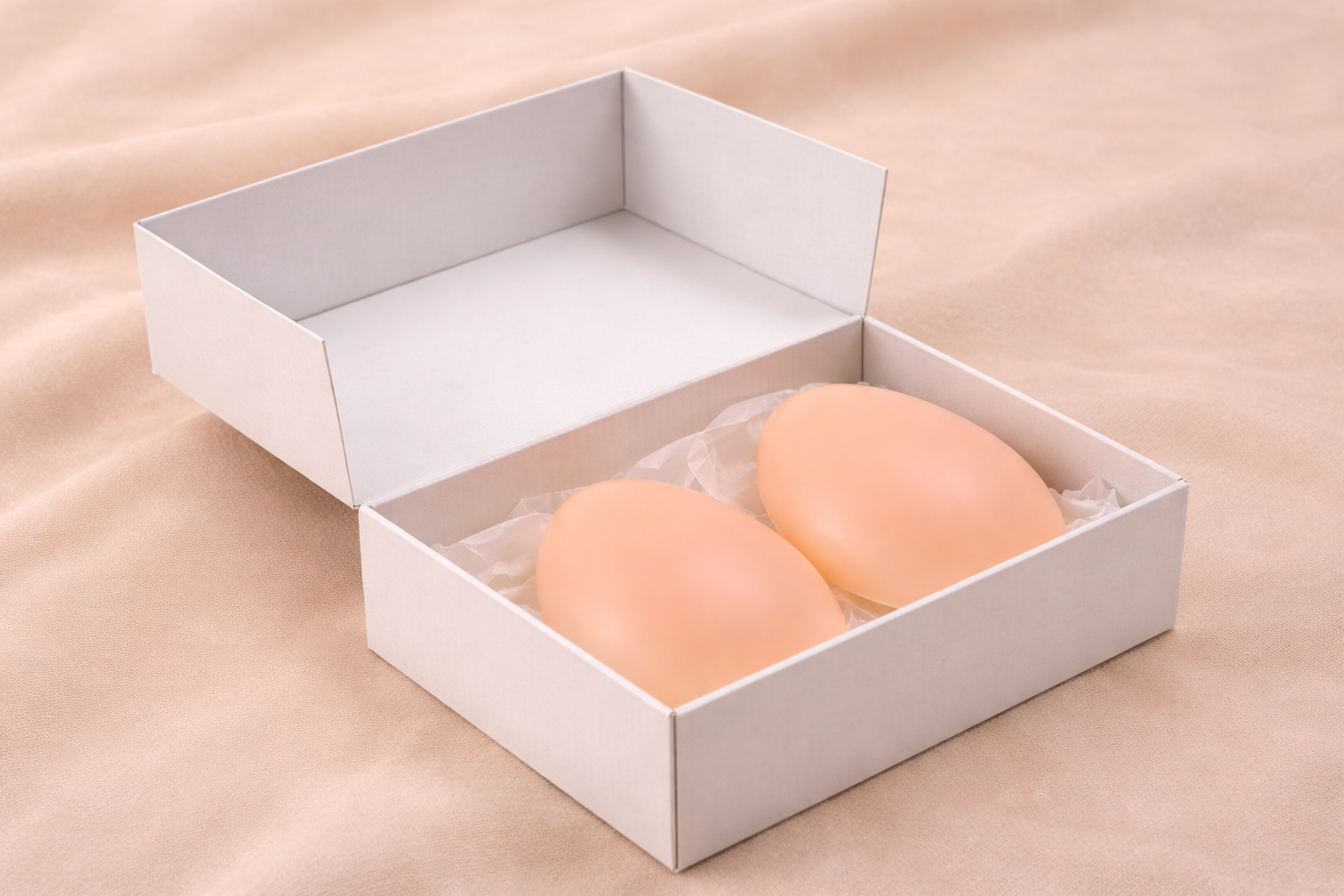
Proper usage is only one side of the equation. Behind reliable performance is a manufacturing system that designs adhesive bras to be used correctly, safely, and repeatedly. Understanding both usage and production logic helps reduce complaints and maximize results.
How should the skin be prepared before wearing an adhesive bra?
Poor adhesion often starts before the bra is even applied. Oil, sweat, or residue weakens bonding immediately.
Skin must be completely clean, dry, and free of oils, lotions, or powders before application to ensure stable adhesion.
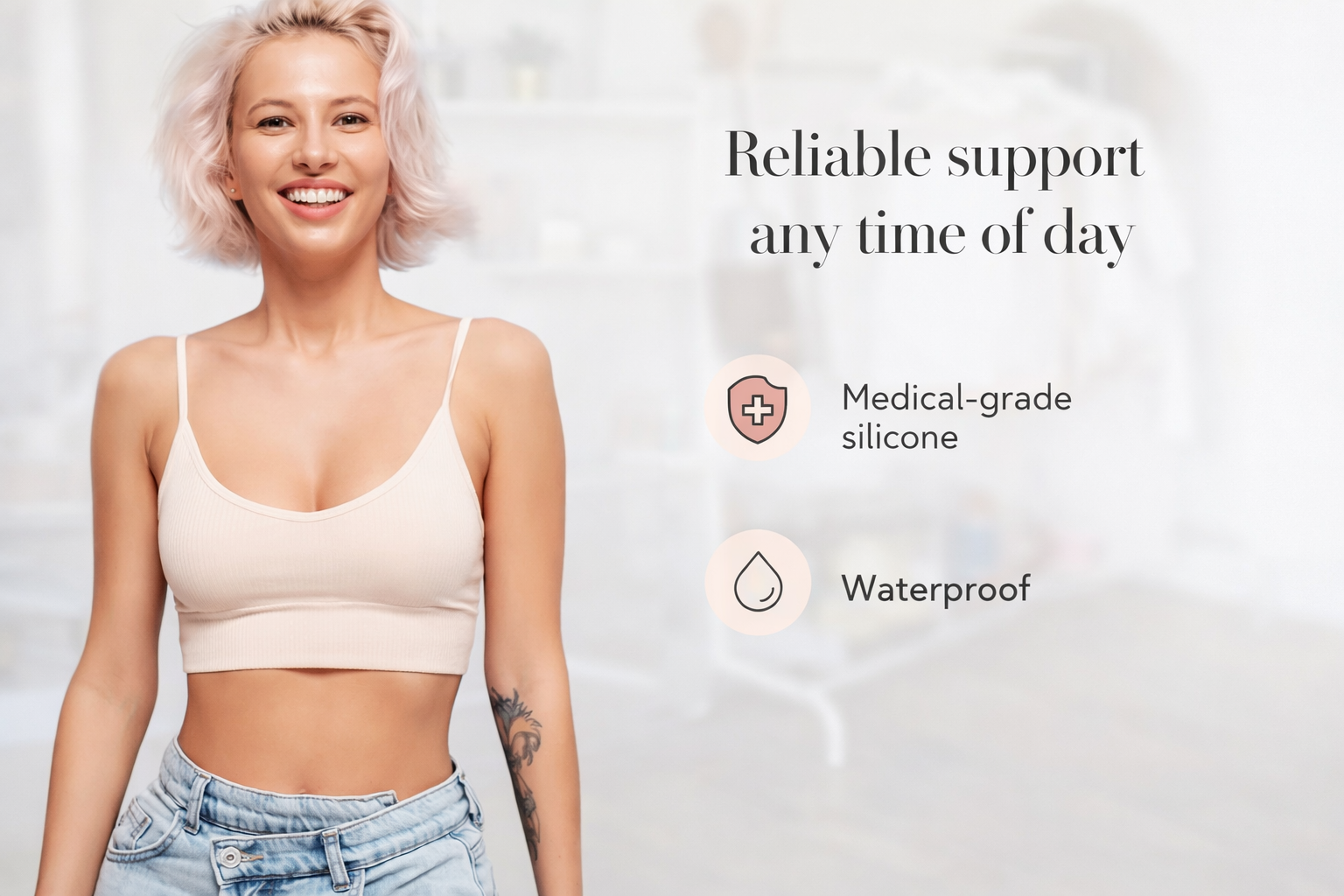
Adhesive bras rely on direct contact between the adhesive layer and the skin surface. Any barrier, including moisturizer, sunscreen, or body oil, reduces contact area and adhesion strength. Even light residue can cause uneven sticking that leads to edge lifting.
Professional manufacturers design adhesives to perform best on bare skin with natural temperature activation. Skin warmth helps stabilize adhesion, but excess moisture interferes with bonding. For this reason, preparation guidelines are part of product design, not just user instructions.
From a production perspective, adhesive formulas are tested against clean skin standards. Adhesion strength values are measured under controlled conditions that simulate real wear environments. When skin preparation is incorrect, even the highest-grade adhesive cannot perform as intended.
Clean application improves not only holding power but also comfort. Proper skin preparation reduces tugging, pressure imbalance, and irritation during wear and removal.
What is the correct way to position an adhesive bra?
Incorrect positioning affects both appearance and comfort. Once attached, repositioning is limited.
Correct positioning starts from the lower outer area of the breast and moves inward, ensuring symmetrical alignment before final pressure is applied.
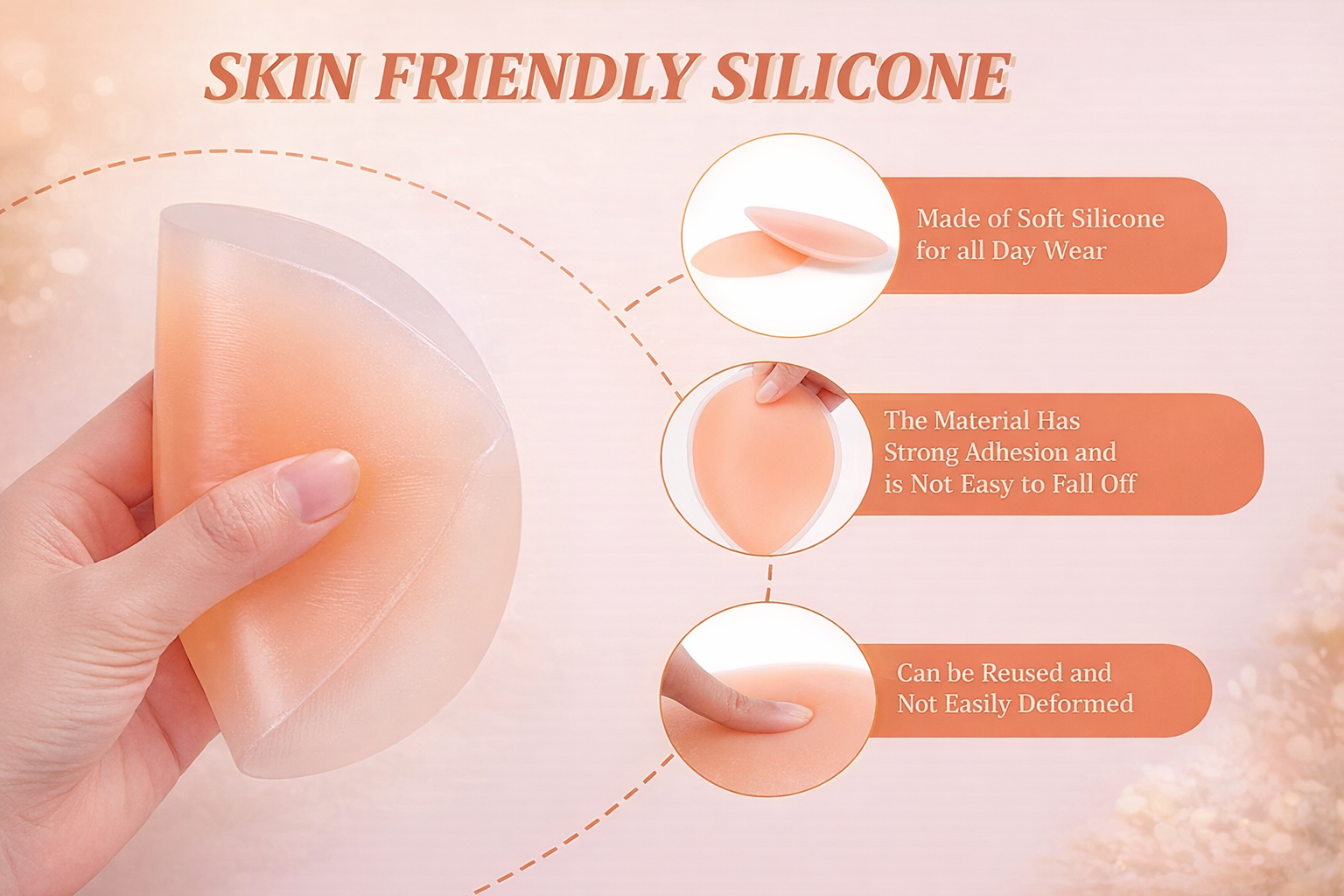
Adhesive bras are engineered with specific cup curvature and lift angles. These shapes are developed during the mold design stage in the factory. Precision steel molds control thickness distribution so the cup supports natural contours.
During application, cups should be aligned evenly on both sides before pressing firmly. Applying one side too high or too close to the center creates imbalance, which reduces shaping effectiveness and increases edge stress.
Manufacturers test cup geometry through wear simulations to determine optimal lift zones. These zones guide correct placement, ensuring the adhesive works with natural breast movement rather than against it.
Accurate positioning also protects adhesive integrity. Excessive repositioning weakens adhesive layers over time, reducing reusability and increasing the risk of residue or uneven wear.
How much pressure is needed during application?
Pressing too lightly or too aggressively can both cause problems.
Moderate, even pressure held for several seconds activates the adhesive without overstressing the skin or material.
Adhesives used in quality adhesive bras are pressure-sensitive. They are designed to bond when gentle pressure is applied evenly across the surface. Pressing too lightly leads to incomplete bonding, while excessive force may cause discomfort or skin strain.
In manufacturing, adhesive layers are applied using automated coating systems to maintain uniform thickness. This consistency ensures predictable pressure response during application. Uneven adhesive layers would require uneven pressure, increasing failure risk.
Controlled pressure allows the adhesive to conform to micro-textures on the skin, improving grip without irritation. This balance is tested through peel and shear strength evaluations during quality inspection.
Correct pressure not only improves adhesion but also extends product life. Proper bonding reduces repeated adjustments, preserving adhesive performance over multiple uses.
How long can an adhesive bra be worn safely?
Extended wear raises concerns about skin health and comfort.
Adhesive bras are designed for temporary wear and should be removed after the intended duration, typically within several hours.
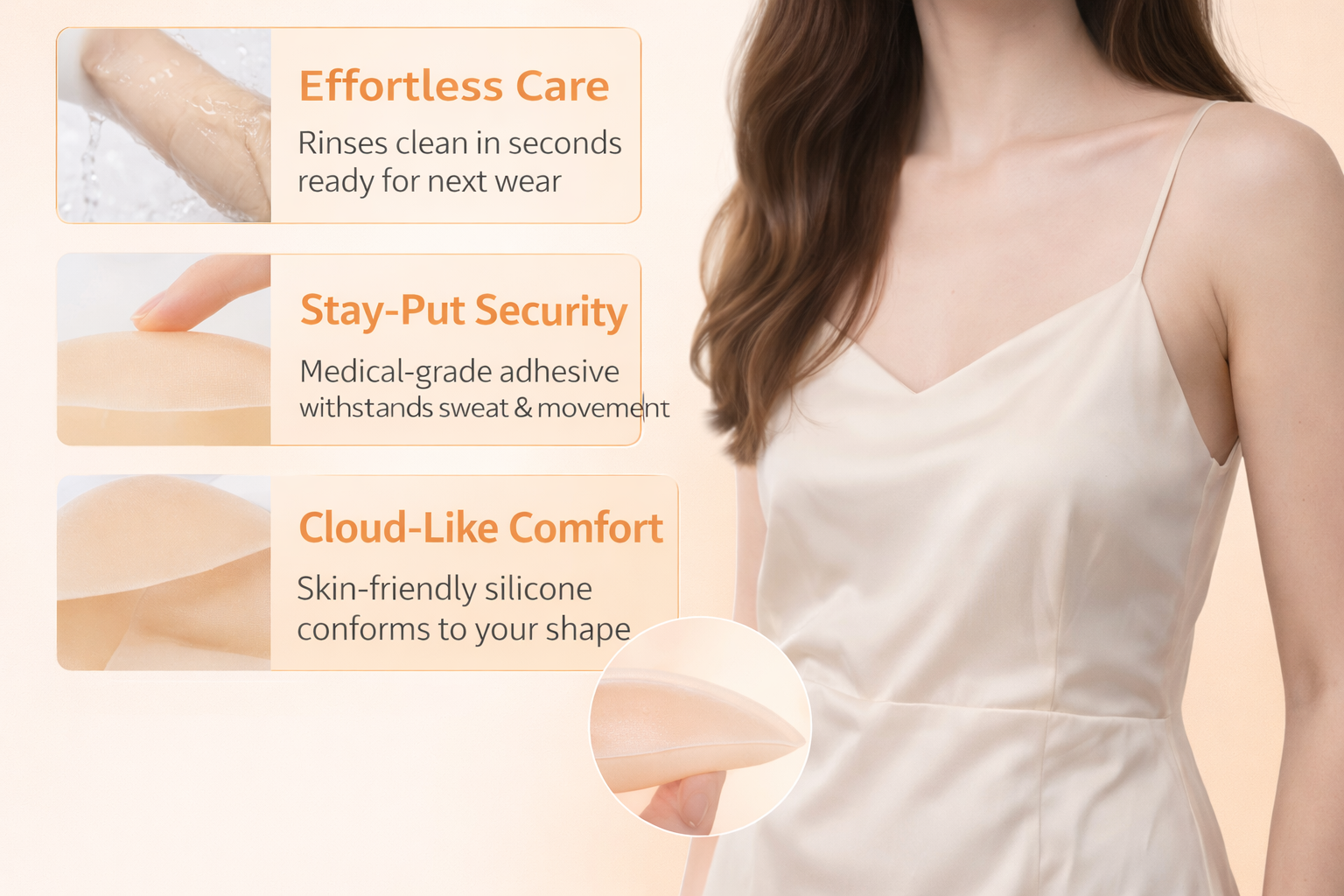
Adhesive bras are engineered for specific use scenarios such as events, occasions, or limited daily wear. Continuous long-term use without breaks may reduce skin breathability and increase moisture buildup.
During product development, factories test wear duration under controlled conditions, including heat and humidity exposure. These tests determine safe wear windows where adhesion remains stable and skin comfort is maintained.
High-quality silicone materials allow flexibility and limited airflow, but no adhesive product is intended for extended uninterrupted wear. Removing the bra after use allows skin recovery and reduces irritation risk.
Proper wear duration also preserves adhesive structure. Overextended wear under sweat and movement accelerates adhesive fatigue, reducing reusability.
How should an adhesive bra be removed correctly?
Improper removal is a common cause of discomfort and skin irritation.
Slow, gentle peeling from the edge while supporting the skin minimizes stress and protects both skin and adhesive.
Adhesive removal should never involve pulling abruptly. Quality adhesives are formulated to release gradually when peeled at a low angle. Supporting the skin during removal reduces tension and discomfort.
From a manufacturing standpoint, adhesive peel strength is carefully calibrated. Testing ensures adhesives detach cleanly without residue when removed correctly. This balance requires precise formulation and curing control.
Factories also evaluate edge finishing. Smooth, rounded edges reduce peeling resistance and make removal easier. Poor edge trimming increases irritation risk and adhesive breakdown.
Correct removal technique protects skin integrity and maintains adhesive surface quality, ensuring the product remains usable for future wear.
How does washing and storage affect future use?
Reusability depends on proper aftercare.
Gentle washing with clean water, air drying, and protected storage maintain adhesion and hygiene.
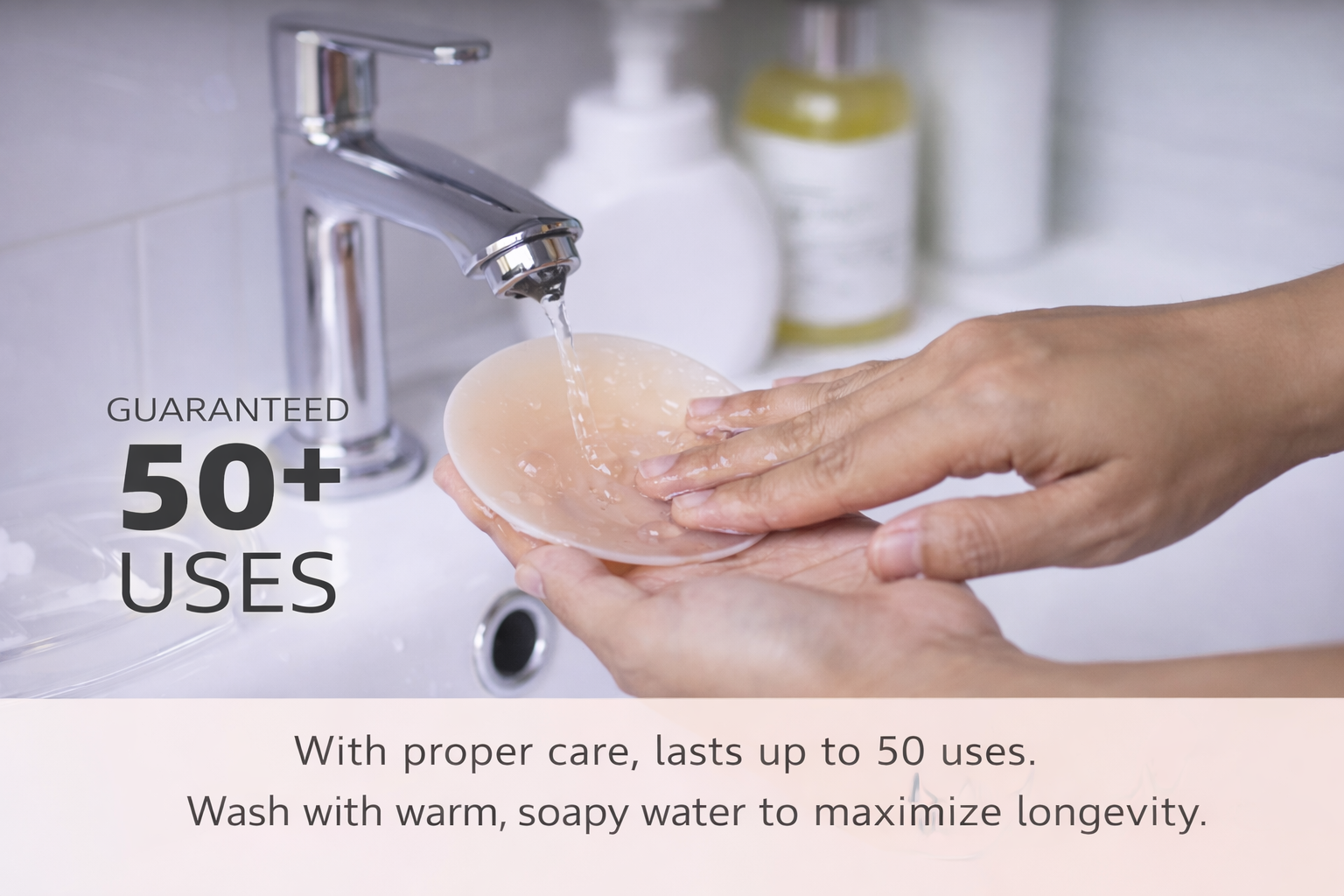
Adhesive bras are designed to be washable, but only under specific conditions. Harsh detergents, brushes, or heat damage adhesive layers. Gentle rinsing removes skin oils while preserving adhesive chemistry.
In production, reusable adhesives are tested across multiple wash cycles. These tests evaluate adhesion recovery after drying and exposure to air. Stable adhesives regain tackiness when dried naturally.
Storage also matters. Factories supply protective films to cover adhesive surfaces. These films prevent dust contamination and oxidation during storage. Improper storage shortens product life and affects hygiene.
Proper aftercare aligns with the original manufacturing design, ensuring safety, comfort, and consistent performance across repeated uses.
How do factory processes support correct usage and safety?
Usage success starts at the factory level.
Precision molding, controlled adhesive coating, and multi-stage inspection ensure adhesive bras perform as intended when used correctly.
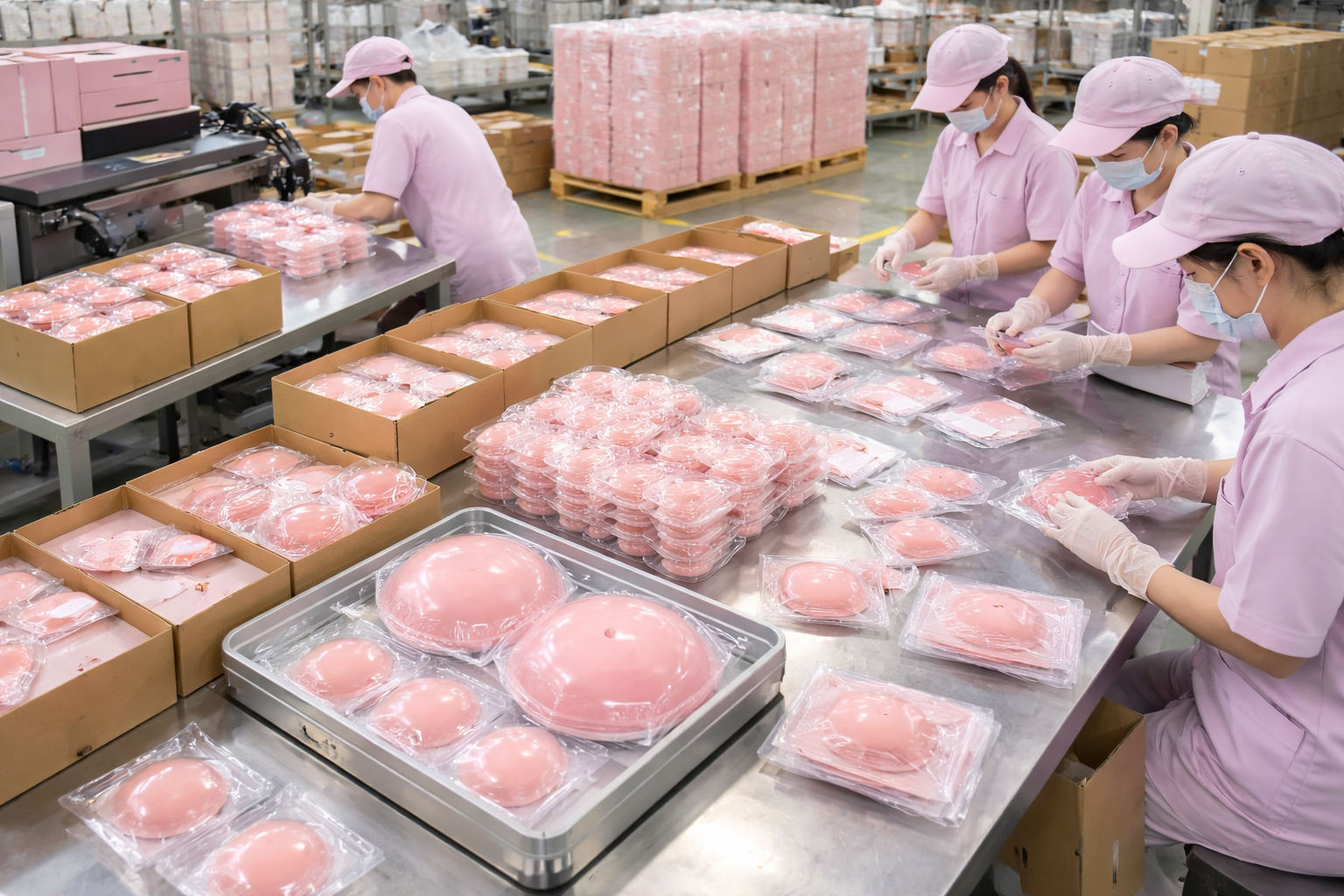
Manufacturing workshops are structured to control every variable affecting usage performance. Silicone molding areas maintain strict temperature control to ensure consistent elasticity. Post-curing stabilizes material properties and removes residual compounds.
Adhesive coating lines use automated systems to achieve uniform thickness. This consistency allows predictable pressure response during application and clean removal.
Quality control teams conduct adhesion testing, wash-cycle simulation, odor checks, and visual inspections. Products that fail to meet standards are removed before packaging.
In-house design and process control allow continuous improvement. Feedback from usage scenarios informs mold adjustments, adhesive tuning, and packaging instructions. This closed-loop system ensures the product supports correct use rather than relying solely on instructions.
Conclusion
Proper use of an adhesive bra depends on correct skin preparation, positioning, pressure, wear duration, removal, and aftercare. These steps work only when supported by disciplined manufacturing processes, precise materials, and controlled production environments. When usage logic and factory engineering align, adhesive bras deliver stable adhesion, skin comfort, and reliable performance across repeated wear.
