
Improper storage is one of the main reasons silicone bras lose stickiness, attract dust, or shorten their lifespan. Most post-use problems come from incorrect cleaning, drying, or storage methods.
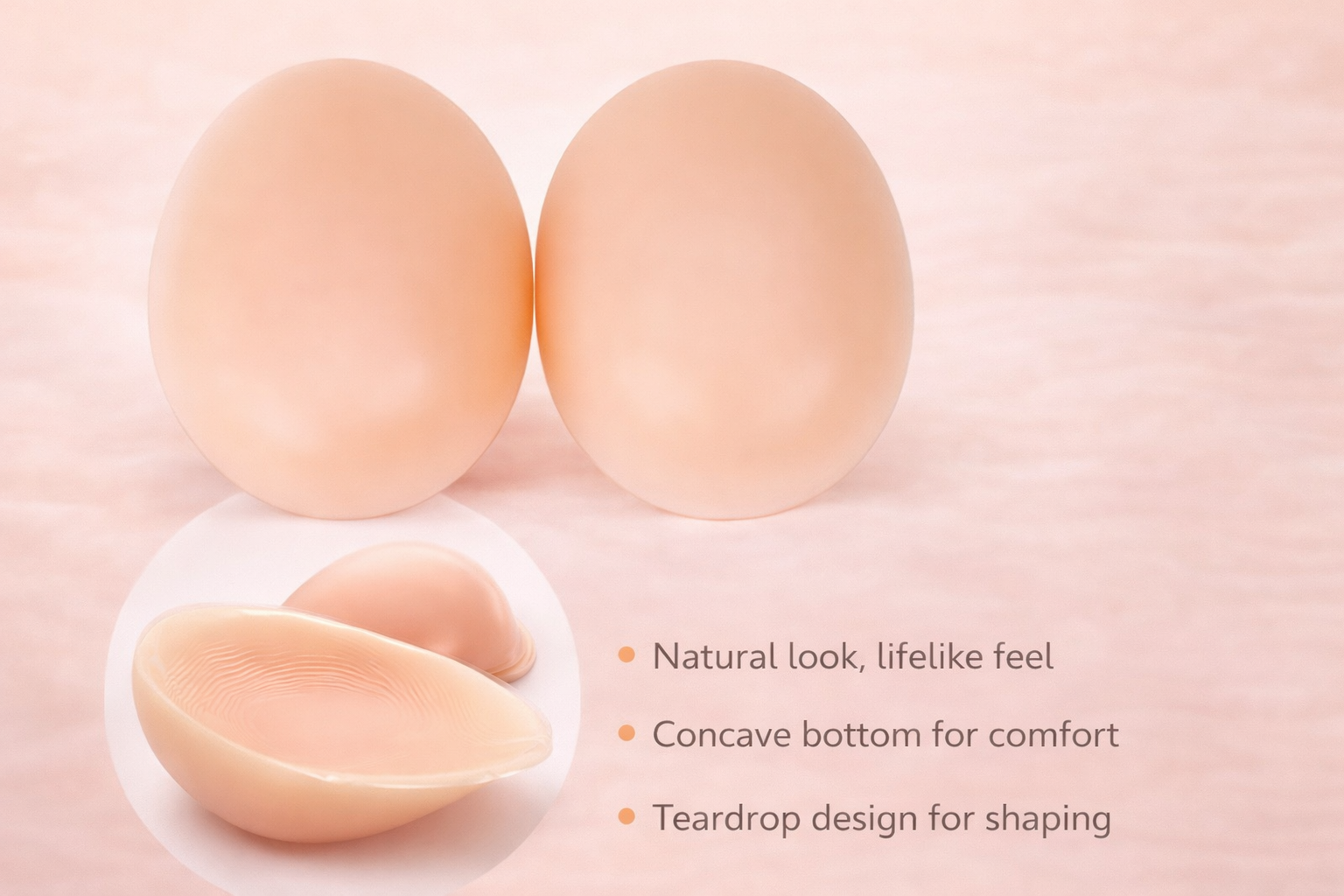
A silicone bra should be gently cleaned, fully air-dried, protected with release film, and stored in a clean, stable environment to maintain adhesion, hygiene, and shape.
Keeping a silicone bra in good condition after use is not only about hygiene. It directly affects adhesive recovery, material stability, and long-term performance. Proper after-use care aligns with how silicone bras are engineered and manufactured.
How should a silicone bra be cleaned after use?
Residual oils and sweat are the primary causes of adhesive degradation.
A silicone bra should be rinsed with clean water and gently cleaned to remove skin oils without damaging the adhesive layer.
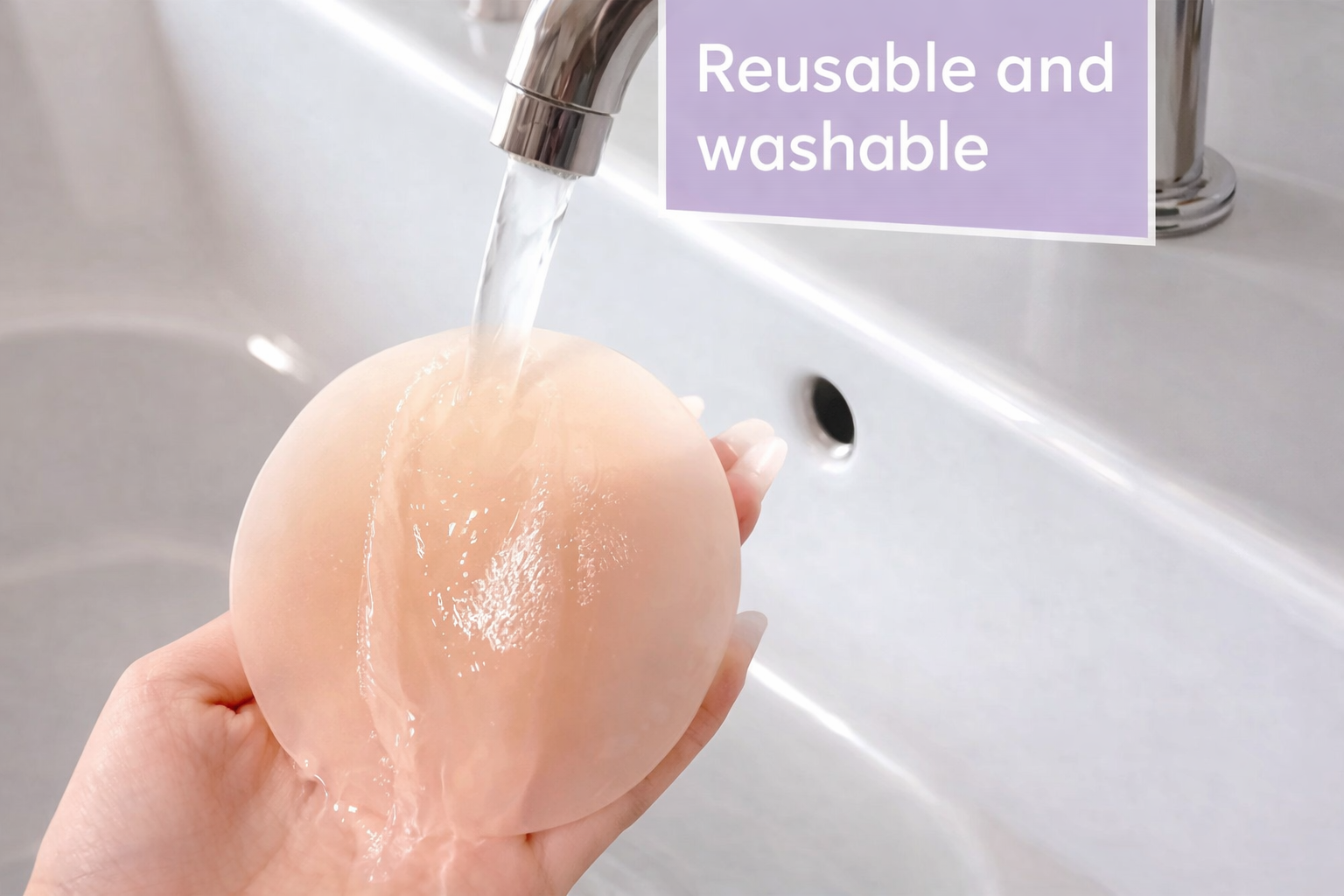
After wear, the adhesive surface contains natural skin oils, sweat, and microscopic debris. These substances block surface contact and reduce adhesion during the next use. Gentle cleaning restores the adhesive’s surface condition.
High-quality silicone bras are designed to tolerate light washing. Clean water or mild, skin-safe soap is sufficient. Harsh detergents, alcohol, or solvents break down adhesive polymers and permanently reduce tackiness.
From a manufacturing perspective, reusable adhesives are formulated to release oils when exposed to water. This characteristic is tested during wash-cycle simulations in the factory. Adhesives that fail to recover tackiness after drying are rejected during development.
Mechanical force should be minimal. Scrubbing, brushing, or squeezing can damage adhesive layers and create uneven surfaces. Proper cleaning maintains both hygiene and structural integrity.
Why is air drying important after washing?
Drying method directly impacts adhesive recovery.
A silicone bra should be air-dried naturally with the adhesive side facing upward, avoiding heat or direct sunlight.
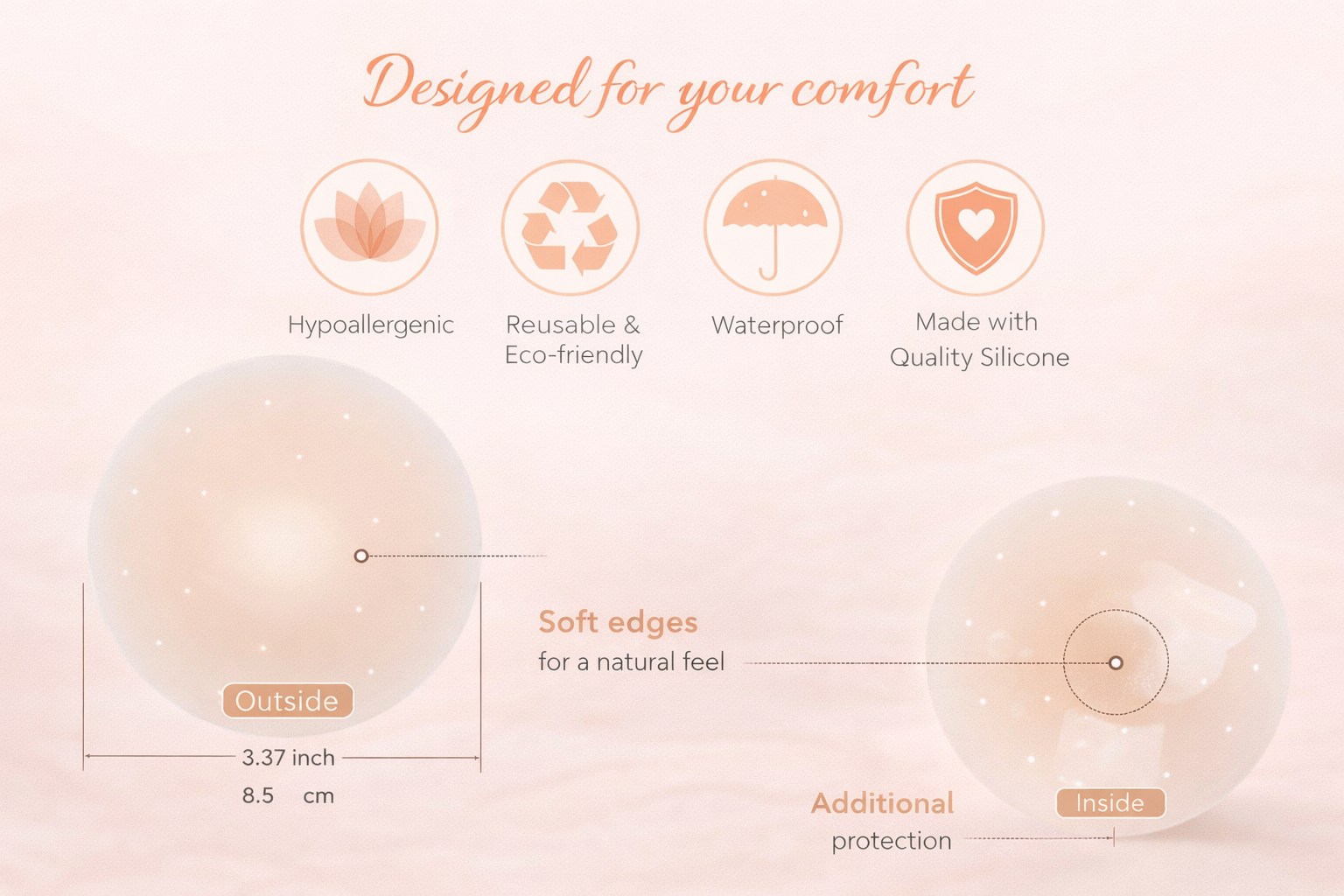
Pressure-sensitive adhesives regain tackiness as moisture evaporates. Natural air drying allows adhesive polymers to return to their original structure. Heat sources such as hair dryers or heaters accelerate evaporation unevenly and may harden or deform adhesive layers.
Direct sunlight introduces two risks: ultraviolet exposure and excessive surface temperature. UV light can degrade adhesive chemistry over time, while heat softens silicone unevenly, affecting shape retention.
In factory testing, drying behavior is evaluated under controlled room-temperature conditions. Adhesives are designed to recover best within this range. Deviating from these conditions reduces lifespan.
Placing the adhesive side upward prevents dust and fibers from settling on the surface during drying. Clean drying environments are essential for maintaining adhesion quality.
Should the protective film be reapplied after use?
Protective films play a critical role in storage.
The original release film should be reapplied once the silicone bra is completely dry to protect the adhesive surface.
Release films are not simple packaging materials. They are engineered to preserve adhesive properties by preventing oxidation, contamination, and mechanical damage.
In production, protective films are applied immediately after adhesive curing. These films have controlled surface energy that allows easy removal without pulling adhesive away from the silicone base.
Reapplying the film after use recreates this protective environment. Without it, adhesive surfaces attract dust, lint, and airborne particles that cannot be fully removed during washing.
If the original film is lost, clean plastic sheets with smooth surfaces can be used as a temporary solution. Rough or textured materials should be avoided, as they imprint patterns onto the adhesive layer.
How should a silicone bra be stored long-term?
Storage conditions determine long-term stability.
Silicone bras should be stored flat or in their original case, away from heat, humidity, and pressure.
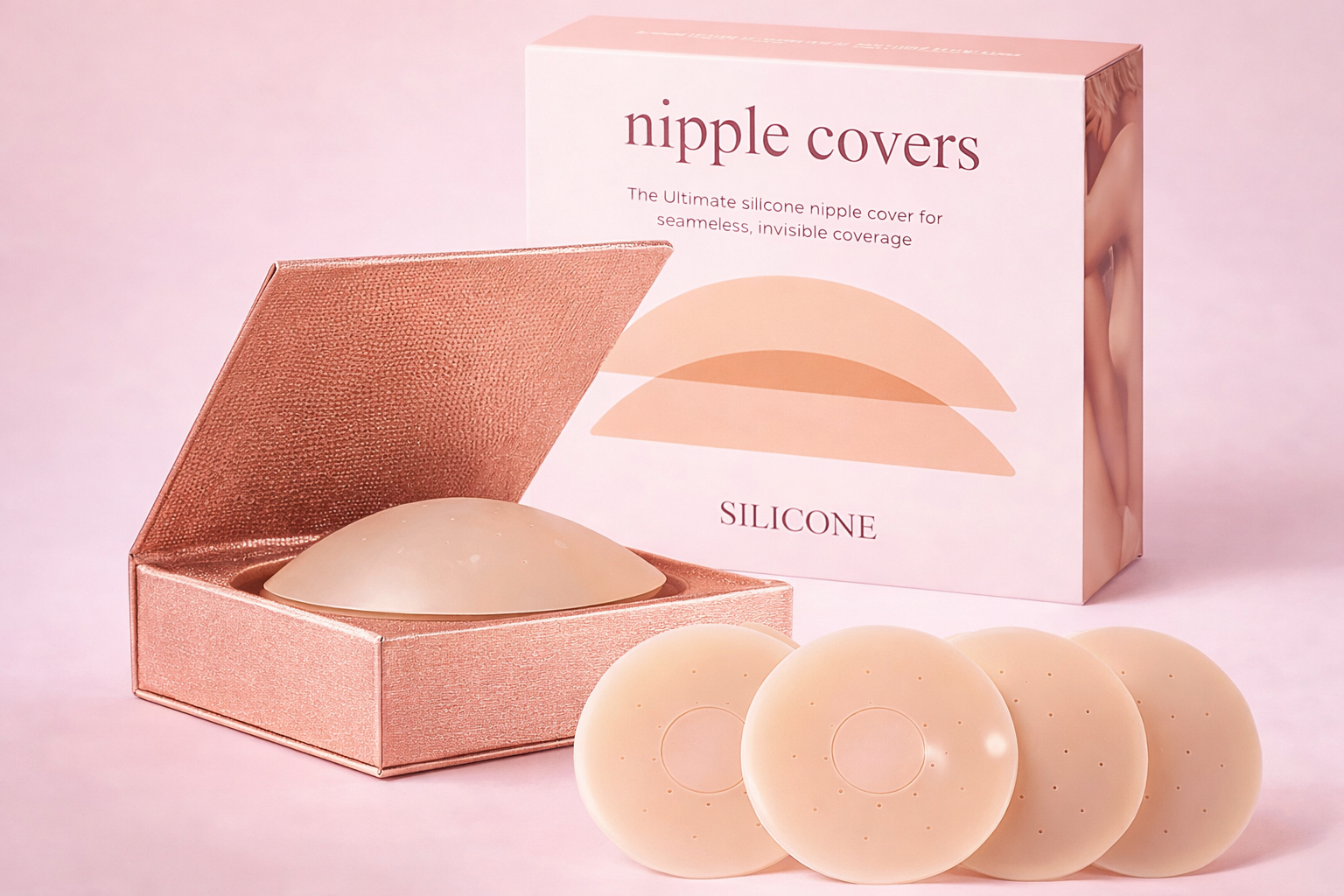
Silicone is flexible but can deform under prolonged pressure. Folding or compressing a silicone bra during storage leads to permanent creases or edge distortion, affecting fit and adhesion.
Professional manufacturers design storage cases that support the natural cup shape. These cases prevent deformation while shielding the product from dust and moisture.
Temperature stability is critical. Excessive heat softens silicone and alters adhesive behavior, while high humidity encourages contamination. Ideal storage conditions are dry, shaded, and room temperature.
In factory warehouses, finished products are stored under controlled conditions before shipment. Replicating similar conditions during personal storage helps preserve factory-level quality over time.
How does repeated use affect hygiene and safety?
Proper aftercare protects skin health.
Consistent cleaning and storage prevent bacterial buildup and maintain skin safety across repeated uses.
Silicone itself is non-porous and resistant to bacterial growth. However, adhesive layers can trap oils and moisture if not cleaned properly, creating an environment for contamination.
Manufacturers account for this by designing washable adhesive systems and recommending cleaning after each use. This is validated through hygiene testing during product development.
Ignoring after-use care increases odor risk and reduces comfort. Over time, contaminated adhesive surfaces may cause skin discomfort even if materials are skin-safe.
Proper hygiene maintenance aligns with the original product design intent and ensures safety throughout the product’s usable life.
How do factory processes influence post-use care requirements?
After-use care reflects production design.
Post-use care guidelines are determined by material selection, adhesive formulation, and manufacturing processes.
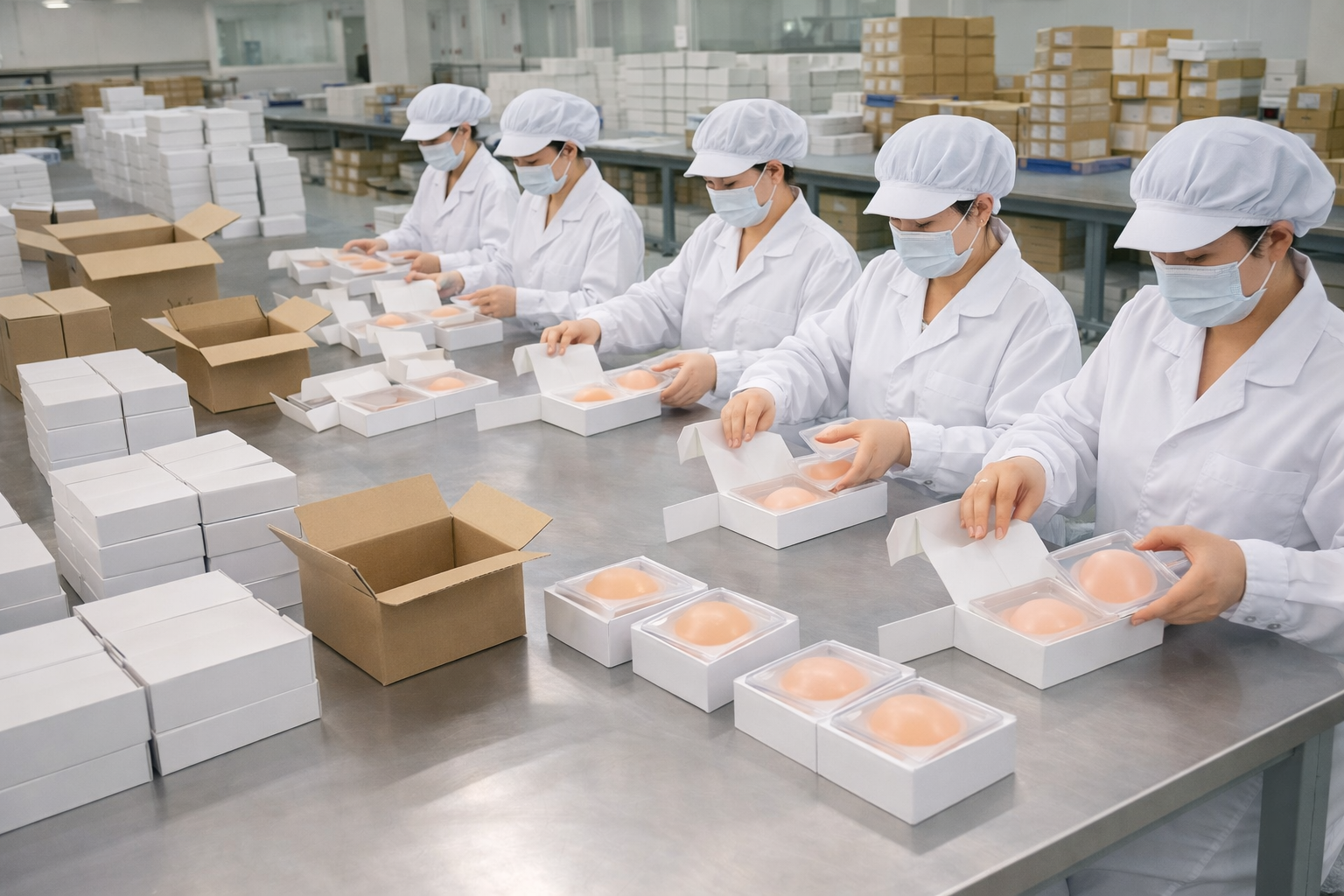
Factories that control silicone formulation and adhesive development design products with predictable aftercare behavior. Adhesives are tuned for wash recovery, and silicone surfaces are finished for easy cleaning.
During production, wash-and-dry simulations are conducted to define realistic care instructions. These instructions are not arbitrary; they are based on measured performance thresholds.
Edge finishing, adhesive bonding methods, and surface smoothness all influence how easily a silicone bra can be cleaned and stored. Poor manufacturing increases care difficulty and reduces product lifespan.
In-house process control allows continuous improvement. When aftercare issues arise, adjustments can be made at the material or process level rather than relying on surface fixes.
Conclusion
Keeping a silicone bra after use requires proper cleaning, natural air drying, protective film application, and stable storage conditions. These steps are not optional habits but essential extensions of how silicone bras are engineered and manufactured. When after-use care aligns with material science and factory design logic, adhesion performance, hygiene, comfort, and shape stability can be maintained across repeated uses. Proper storage transforms a silicone bra from a short-term accessory into a durable, reliable wearable solution.
