
Silicone bras are often associated with water resistance, which leads to confusion about swimming use. Detachment, discomfort, and rapid adhesive failure are common when expectations do not match product design.
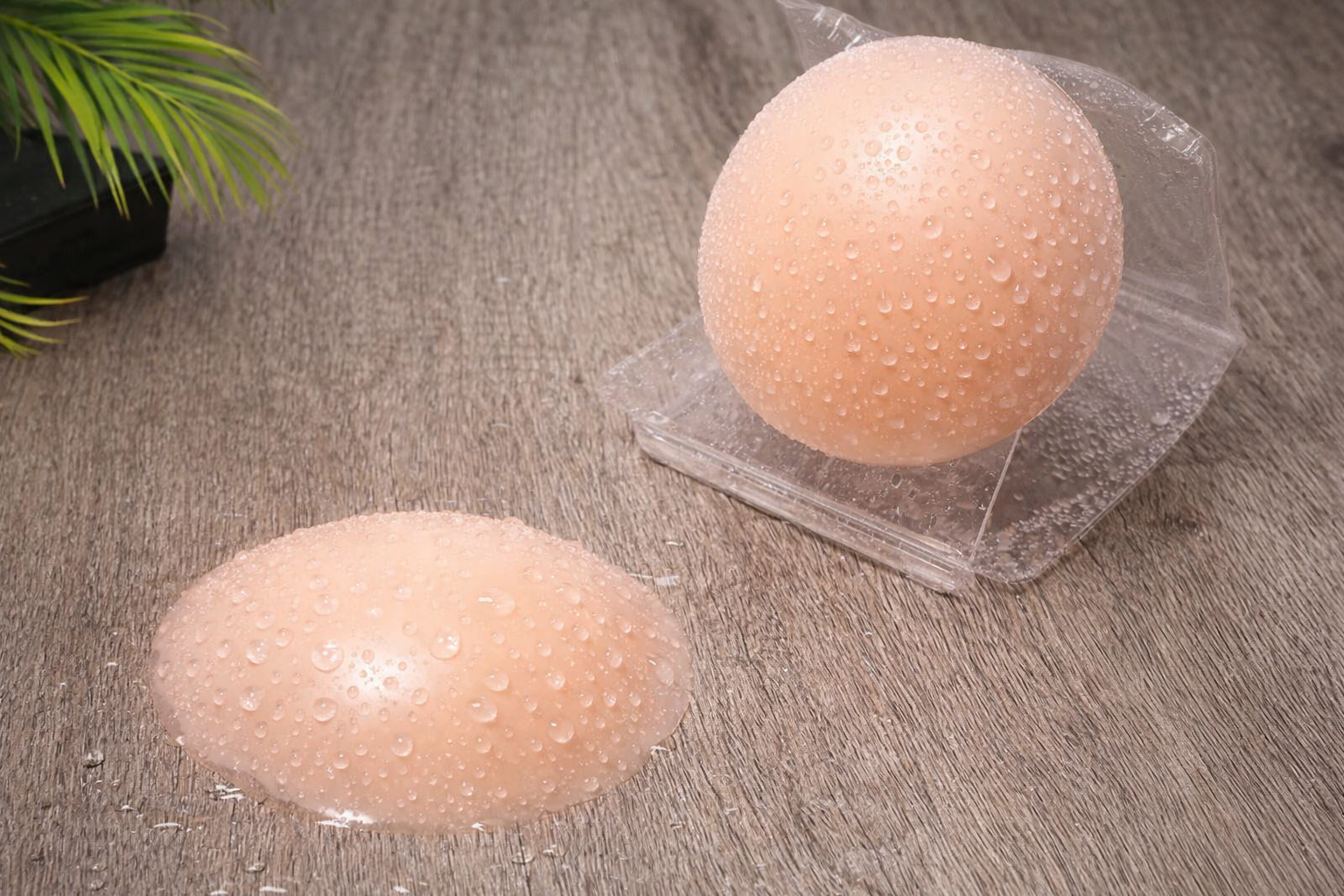
Silicone bras are not designed for swimming; prolonged water exposure weakens adhesion, affects stability, and shortens product lifespan, even when materials appear water-resistant.
Understanding why silicone bras are unsuitable for swimming requires looking at adhesive behavior, silicone structure, and how these products are engineered and tested in manufacturing environments.
Are silicone bras waterproof or water-resistant?
Water resistance is often misunderstood as swim suitability.
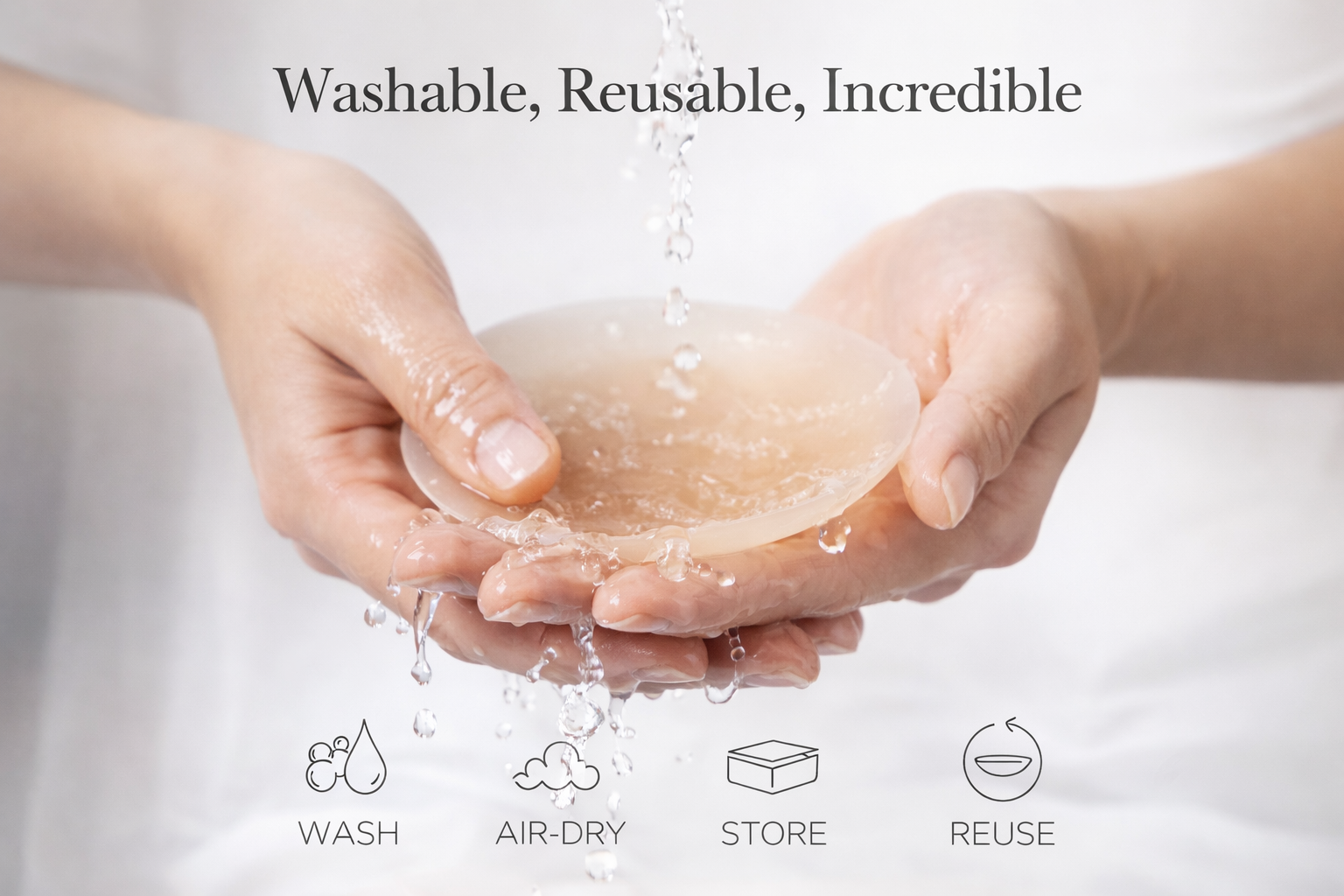
Silicone bras may resist light moisture but are not engineered to maintain adhesion under full water immersion.
High-quality silicone itself is waterproof. It does not absorb water and remains flexible when wet. This leads many to assume silicone bras can be used in swimming conditions.
The limitation lies in the adhesive system. Pressure-sensitive adhesives used in silicone bras rely on surface contact and controlled friction with dry skin. Water disrupts this contact by creating a barrier between adhesive and skin.
In factory testing, adhesives are evaluated under humidity and sweat simulation, not full submersion. Short contact with moisture may be tolerated, but continuous water flow and immersion dramatically reduce adhesion strength.
Water movement also introduces shear forces that exceed design limits. Even if adhesion holds briefly, stability becomes unpredictable, increasing detachment risk.
What happens to adhesive when submerged in water?
Adhesive performance changes immediately in water.
Water interferes with adhesive bonding by reducing surface friction and altering polymer behavior.
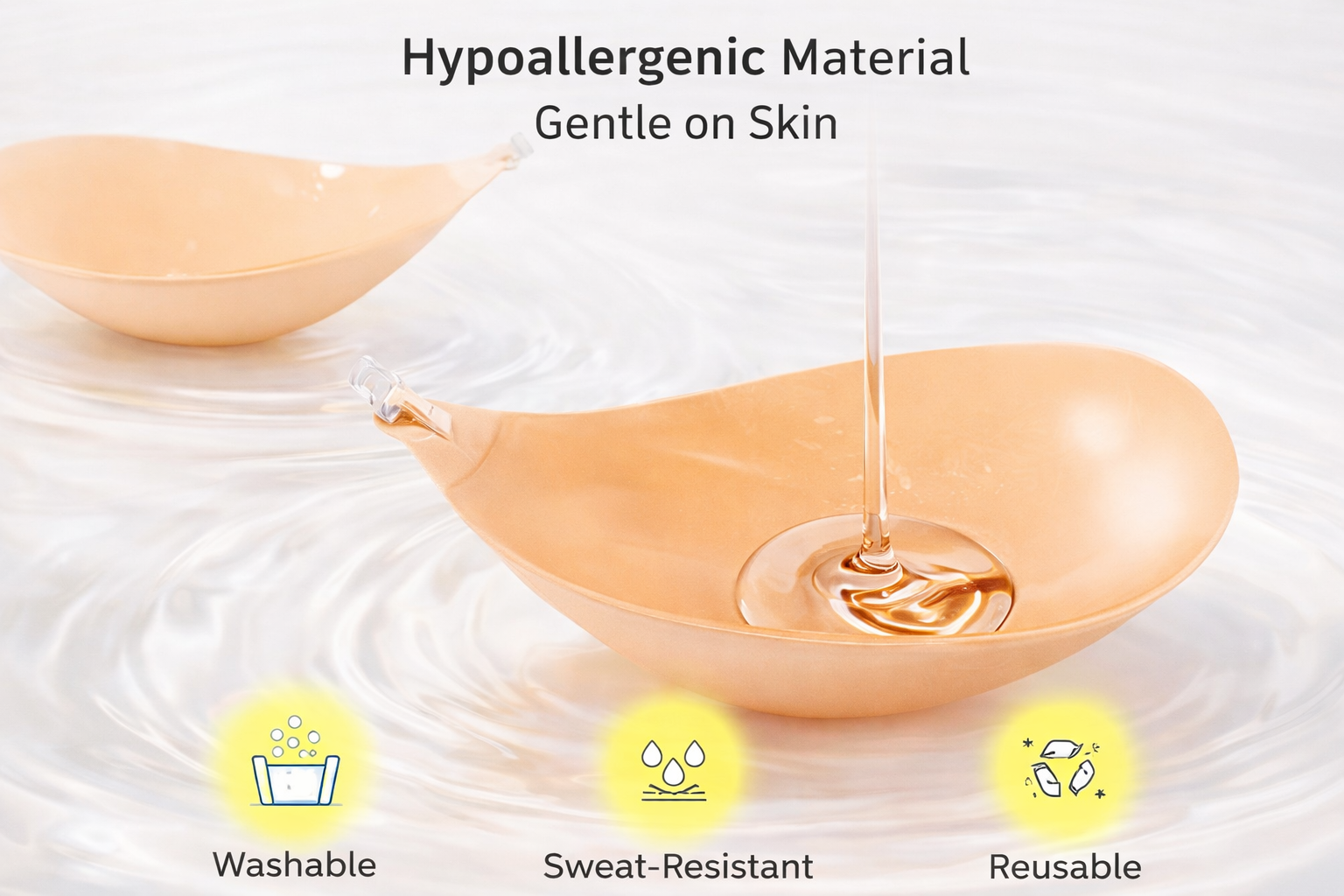
Pressure-sensitive adhesives are formulated to remain tacky in dry conditions. When submerged, water fills micro-gaps between adhesive and skin, reducing effective contact area.
Chlorine and salt further accelerate degradation. These substances break down adhesive polymers and shorten recovery ability after drying. This damage is often irreversible.
In manufacturing labs, adhesive recovery is tested after controlled washing, not swimming. Submersion introduces chemical and mechanical stress far beyond normal reuse conditions.
Repeated water exposure leads to uneven stickiness, edge lifting, and residue buildup. These effects compromise both performance and hygiene.
Can swimming damage the silicone bra permanently?
Water exposure affects long-term durability.
Swimming can permanently reduce adhesion lifespan and compromise structural integrity.
While silicone material itself remains stable, adhesive layers suffer from prolonged water exposure. Adhesives may swell, lose elasticity, or detach partially from the silicone base.
In production, adhesive bonding to silicone is engineered for repeated dry wear and gentle washing. Swimming introduces continuous motion, pressure, and chemical exposure not accounted for in design parameters.
Edge finishing is particularly vulnerable. Water movement increases peeling forces at thin edges, leading to early failure even after drying.
Once adhesive integrity is compromised, performance rarely returns to original condition. Swimming often reduces a product designed for dozens of uses to only a few remaining wears.
Are there any silicone bras marketed as “waterproof”?
Marketing terms often lack technical clarity.
Some silicone bras are labeled water-resistant, but this does not mean they are suitable for swimming.
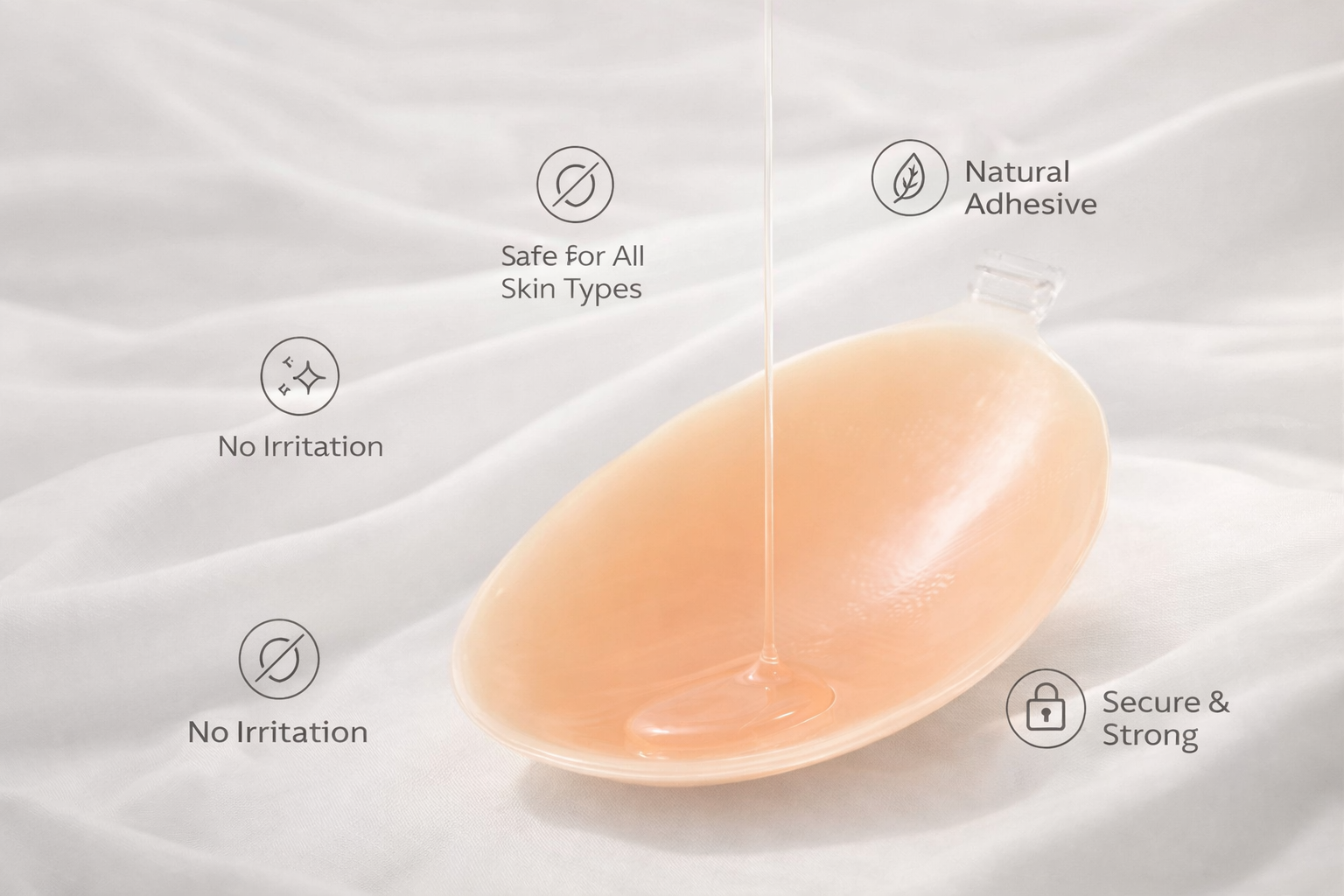
“Water-resistant” typically refers to tolerance for light moisture, sweat, or brief splashes. It does not indicate stability under full immersion or active swimming.
Factories define performance claims based on internal testing standards. Most adhesive systems are validated for sweat and humidity, not pool or ocean environments.
Without specific submersion testing and chemical exposure validation, waterproof claims should be interpreted cautiously. True swim-safe products require entirely different attachment systems.
Silicone bras are optimized for fashion wear scenarios rather than aquatic activity. Misuse leads to failure that is often mistaken for quality issues.
How do factory processes define intended use scenarios?
Use limitations are engineered during production.
Silicone bra design, adhesive selection, and testing parameters clearly define non-swimming use cases.
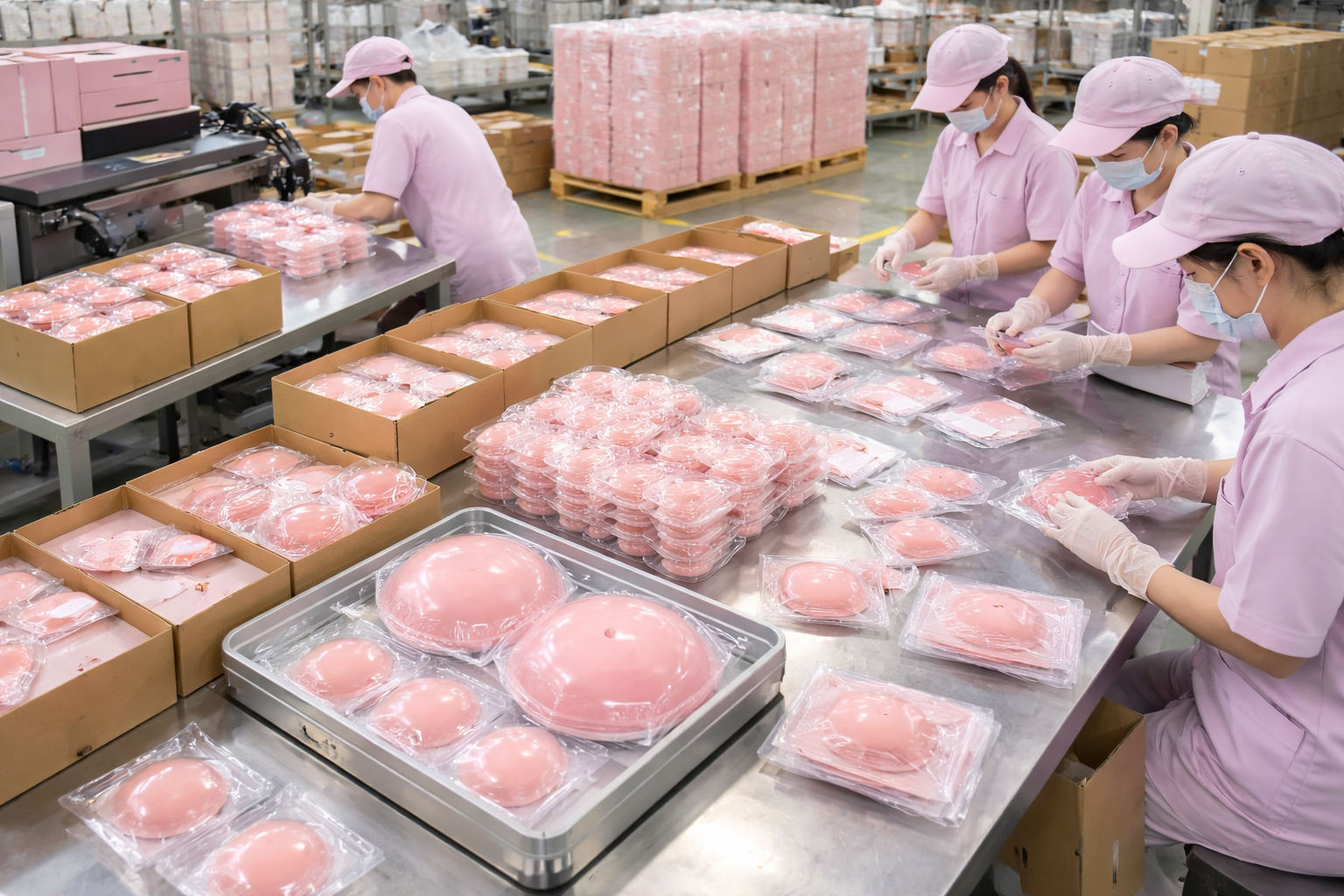
During development, factories select silicone density, thickness mapping, and adhesive formulation based on intended wear scenarios such as events, daily outfits, and limited-duration use.
Adhesives are tested under controlled heat, humidity, and motion conditions. Submersion testing is not part of standard validation because swimming is outside intended use.
Production workshops maintain strict control over curing, coating thickness, and surface finishing. These controls ensure predictable dry-skin adhesion but do not convert adhesive systems into aquatic-grade solutions.
Quality inspection focuses on adhesion stability, peel strength, wash recovery, and skin comfort. Swimming performance is excluded by design, not oversight.
What should be worn instead for swimming?
Function-specific solutions are required.
Swimming requires garments designed for water immersion, not adhesive-based support systems.

Swimwear relies on mechanical support such as elastic bands, compression fabrics, and structured linings. These systems maintain stability under water pressure and movement.
Silicone bras lack mechanical anchoring. Adhesion alone cannot counter buoyancy, drag, and water flow during swimming.
Factories specializing in silicone bras design products for invisibility and comfort under clothing, not for aquatic resistance. Using products outside their engineered purpose leads to failure and dissatisfaction.
Choosing the correct product for the correct environment protects both performance expectations and product lifespan.
Conclusion
Silicone bras are not suitable for swimming. While silicone material itself is waterproof, the adhesive systems are engineered for dry-skin contact, limited moisture, and controlled wear duration. Water immersion disrupts adhesion, accelerates degradation, and permanently shortens product lifespan. Manufacturing processes, testing standards, and design intent clearly define silicone bras as fashion support solutions rather than swimwear. For water activities, garments designed with mechanical support and aquatic-grade materials are the only reliable choice.
